
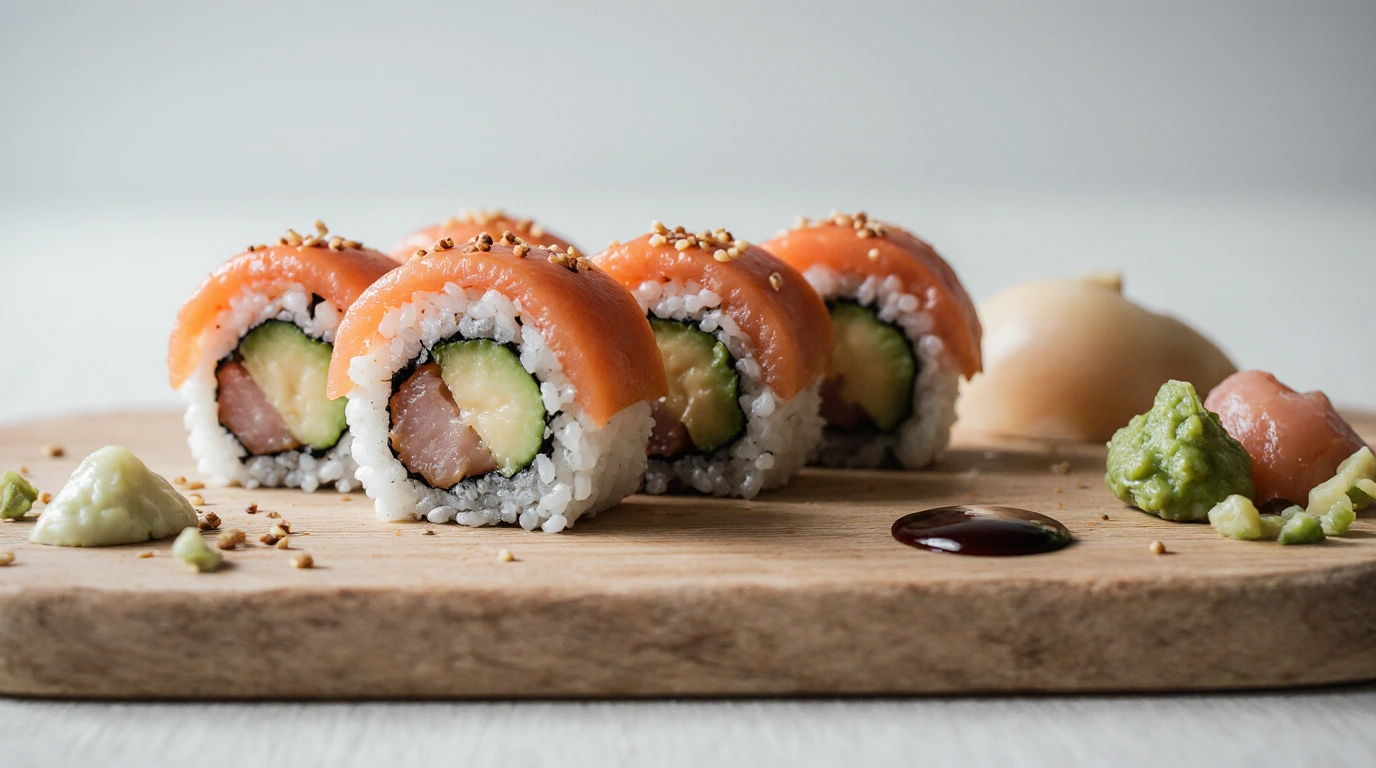
Easy Sushi Roll Recipe at Home
Making homemade sushi is fun and rewarding. I remember my first time making sushi at home. It was a bit scary, but it tasted amazing!
To make your own easy sushi roll recipe, you need a few things. You’ll need a bamboo mat, nori, cooked rice with rice vinegar, and your favorite fillings.

Sushi Roll
By making simple sushi roll at home, you can save money. You can also make it just the way you like it. Plus, it’s a great way to wow your friends and family with a homemade meal.
Key Takeaways
- Make homemade sushi with simple ingredients and basic equipment
- Customize your sushi to your taste with various fillings
- Save money by making sushi at home instead of buying it
- Impress your friends and family with a delicious homemade meal
- Use a bamboo mat to make rolling sushi easier
Why Making Sushi Rolls at Home is Worth It
Making sushi rolls at home is fun and saves money. It lets you enjoy your favorite dish without the high costs of dining out or takeout.
Cost Benefits of Homemade Sushi Rolls
Homemade sushi can cut down your expenses. A sushi dinner for two can cost $50 or more at a restaurant. But, making it at home can cost just $10 for the same meal. This is because you can buy ingredients in bulk and make multiple meals from them.
Here’s a simple comparison:
| Item | Restaurant Cost | Homemade Cost |
| Sushi Dinner for 2 | $50 | $10 |
| Sushi Ingredients (bulk) | N/A | $20 (multiple meals) |
Customization Possibilities
When you make sushi rolls at home, you can choose your ingredients. You can pick your favorite fillings, like salmon, spicy tuna, or cucumber and avocado. This lets you make sushi that everyone in your family will enjoy.

homemade sushi roll
Fun Activity for Family and Friends
Making sushi rolls is a fun activity for everyone. You can get your family and friends involved, from preparing the ingredients to rolling the sushi. It’s a great way to have fun and enjoy a meal together.
Essential Equipment for Making Sushi Rolls
You don’t need fancy gadgets to make sushi rolls at home. The right tools make it easier and more fun. Here are the basics you’ll need to start.
Bamboo Rolling Mat (Makisu)
A bamboo rolling mat, or makisu, is key for making sushi rolls. It helps shape and roll your sushi evenly. Place a nori sheet on the mat, spread sushi rice on it, and add your fillings. Roll it up firmly but gently.
Sharp Knife Requirements
A sharp knife is vital for cutting ingredients and slicing rolls. A dull knife can tear your ingredients, ruining your sushi’s look. Get a good-quality, sharp knife and keep it sharp.
Optional Tools That Help
While not essential, some tools can ease the sushi-making process. These include a rice paddle and bowl, and plastic wrap for uramaki (inside-out rolls).
Rice Paddle and Bowl
A rice paddle helps you handle and mix sushi rice gently. A large mixing bowl is great for preparing and seasoning the rice. These tools help you get perfect sushi rice.
Plastic Wrap for Uramaki
For uramaki, or inside-out rolls, plastic wrap can cover your bamboo mat. It prevents rice from sticking to the mat, making rolling smoother.
With these essential and optional tools, you’re ready to make your own sushi rolls at home. Try different ingredients and techniques to find what works best for you.
Understanding Sushi Roll Ingredients
Making sushi rolls starts with picking the right ingredients. To craft a traditional sushi roll, knowing each part’s role is key.
Selecting the Right Rice
First, you need the right rice. For real sushi, use short-grain rice. It’s stickier and better for sushi than long-grain rice.
Short-Grain vs. Medium-Grain Rice
Short-grain rice sticks together well, perfect for sushi. Medium-grain rice is similar but less sticky. For the best sushi roll recipe, go with short-grain rice.
Pre-Packaged Sushi Rice Options
For beginners, try pre-packaged sushi rice. It often comes with seasoning. Brands like Heinen’s have organic cooked white rice great for sushi.
Nori Seaweed Sheets
Nori seaweed sheets are vital. They wrap around your fillings and rice, keeping the roll together. Choose nori sheets that are crisp and dark.
Fresh Fish Selection and Safety
Using fresh fish in sushi rolls is crucial. You must pick sushi-grade fish to avoid health risks.
Sushi-Grade Fish Requirements
Sushi-grade fish is labeled as such. It’s frozen to kill parasites, making it safe for raw eating.
Safe Alternatives for Beginners
New to sushi? Try cooked fish or vegetarian options. They’re tasty and safer than raw fish.
By choosing the right sushi roll ingredients, you’re ready to make tasty homemade sushi.
Preparing Perfect Sushi Rice
The key to a great sushi roll is the rice. To make sushi rice, you need to wash, cook, and season it. I’ll show you how to do this for perfect sushi rice.
Rice Washing Technique
Washing sushi rice removes excess starch. This makes the rice better in texture and taste. To wash, use cold water and rub the rice grains until the water is clear. This takes a few minutes and a few water changes.
Cooking Sushi Rice Properly
You can cook sushi rice on the stovetop or in a rice cooker. The choice depends on what you prefer and what you have.
Stovetop Method
For stovetop cooking, mix washed and drained rice with water in a saucepan. Boil, then lower the heat and simmer for 15-20 minutes. Turn off the heat and rest for 5 minutes before opening.
Rice Cooker Method
A rice cooker makes it easy. Just add the washed rice and water, and choose the white rice setting. The cooker will turn off when the rice is done.
| Cooking Method | Time | Equipment |
| Stovetop | 20-25 minutes | Saucepan, Stovetop |
| Rice Cooker | Variable | Rice Cooker |
Seasoning with Rice Vinegar Mixture
Seasoning sushi rice with a vinegar mixture is key for flavor. The mix usually has rice vinegar, sugar, and salt.
Traditional Sushi Vinegar Recipe
To make the vinegar mix, mix 1/4 cup of rice vinegar, 2 tablespoons of sugar, and 1 teaspoon of salt in a saucepan. Heat it over low heat, stirring until the sugar and salt dissolve.
Cooling and Mixing Process
After cooking, put the rice in a large bowl. Pour the cooled vinegar mix over it and gently fold with a wooden spoon. Let the rice cool to room temperature.
By following these steps, you can make perfect sushi rice for your homemade sushi rolls. Remember, the quality of your sushi rice affects the taste and texture of your sushi.
Preparing Your Fillings
Before you start rolling, it’s key to prepare your fillings well. The fillings you pick can change how your sushi rolls taste and feel. So, it’s important to choose and prepare them right.
Fish Preparation Tips
When using fish in your sushi, it’s crucial to handle it safely and prepare it right. I suggest using fresh, sashimi-grade fish whenever you can. For example, you can use 1/2 lb of imitation crab meat as a filling.
Make sure to cut the fish into thin, uniform pieces. This helps ensure even distribution in the roll.
Vegetable Cutting Techniques
Vegetables add crunch, flavor, and color to your sushi rolls. To prepare vegetables, you’ll need to learn a few cutting techniques. One popular method is the julienne cut, which involves cutting vegetables into long, thin strips.
Julienne Cutting Method
To julienne cut, slice your vegetables into thin planks. Then, stack them and cut into matchstick-thin strips. This works well for vegetables like carrots and cucumbers.
Best Vegetables for Sushi Rolls
Some of the best vegetables for sushi rolls include avocado, cucumber, and carrots. For instance, you can use 1 ripe but firm avocado and 1/2 medium cucumber. Peel and slice them into long julienne strips.
Creative Filling Combinations
Don’t be afraid to try different filling combinations. Try pairing traditional ingredients like fish and cucumber with more adventurous options like spicy mayo or tempura bits. This can help you create a unique sushi roll recipe.
You can also get inspiration from traditional sushi roll recipes and modify them to fit your taste.
The Perfect Sushi Roll Technique Step by Step
To make perfect sushi rolls, follow a step-by-step guide. Making sushi at home is fun and rewarding with the right technique. We’ll guide you through setting up your workstation to rolling the perfect sushi.
Setting Up Your Workstation
Before starting, set up your workstation right. You’ll need a bamboo rolling mat (makisu), a sharp knife, and your ingredients within reach. Make sure your workspace is clean and dry to avoid sticking issues.
Rice Spreading Method
Spread a generous handful of sushi rice onto the 1/2 sheet of nori. Use your wet finger tips to spread the rice evenly over the entire surface of the nori.
Wet Hands Technique
Keep your hands wet to prevent rice from sticking. Dip your fingers in water before touching the rice.
Even Distribution Tips
To spread rice evenly, start from the center and spread outwards. Leave a small border at the top without rice.
Filling Placement Strategy
Place your chosen fillings horizontally in the middle of the rice. Be careful not to overfill, as it can make rolling hard.
| Filling Type | Recommended Amount | Tips |
| Raw Fish | 1-2 slices | Ensure freshness and handle with clean utensils |
| Vegetables | 1/2 cup, sliced | Cut into thin strips for easier rolling |
| Crab Stick | 1 stick, sliced | Real crab or imitation, sliced into thin strips |
Rolling Technique for Beginners
To roll the sushi, align the filling with the edge of the nori and start rolling using your bamboo mat. Apply gentle pressure to form a compact roll.
Tight Rolling Without Tearing
Roll the sushi tightly but gently to avoid tearing the nori. If you feel resistance, adjust your pressure.
Sealing the Edge Properly
To seal the edge, moisten the top border of the nori with a little water. This will help the nori stick together, securing your roll.
By following these steps and practicing regularly, you’ll make perfect sushi rolls at home. Remember, the key to great sushi rolls is in the preparation and the rolling technique.
Traditional Sushi Roll Varieties You Can Make at Home
Want to try making sushi? Start with traditional rolls. These classic types have been loved for ages and are easy to make at home.
The California roll is a top pick for beginners. It uses cooked ingredients and is simple to make.
California Roll Tutorial
The California roll is an inside-out roll. It has fillings wrapped in nori seaweed, then covered in sushi rice.
Inside-Out Rolling Technique
To make an inside-out roll, spread sushi rice on plastic wrap. Leave a border around the edges. Place your fillings in the middle.
Avocado and Crab Preparation
For a traditional California roll, use ripe avocado and imitation crab. Slice the avocado thinly and cut the crab into strips.
Spicy Tuna Roll Recipe
The spicy tuna roll is perfect for those who like a kick. It has sashimi-grade tuna, spicy mayo, cucumber, and sometimes avocado.
| Sushi Roll | Main Ingredients | Level of Spiciness |
| California Roll | Imitation crab, avocado, cucumber | Mild |
| Spicy Tuna Roll | Tuna, spicy mayo, cucumber | Medium to Hot |
| Vegetarian Roll | Avocado, cucumber, carrots | Mild |
Vegetarian Roll Options
Vegetarian sushi rolls are perfect for those who don’t eat fish or seafood. They can be filled with avocado, cucumber, and carrots.
These traditional sushi rolls offer a tasty and authentic sushi experience right at home.
Creative Sushi Roll Ideas for Beginners
As a beginner, you might be surprised at the variety of creative sushi roll ideas you can try at home. Making sushi rolls is not just about following traditional recipes. It’s an opportunity to experiment with different ingredients and flavors. In this section, we’ll explore some creative ideas to get you started on your sushi-making journey.
Cooked Ingredient Rolls
Cooked ingredient rolls are a great way to start making sushi, even if you’re not comfortable with raw fish. These rolls can be just as delicious and satisfying as their raw counterparts.
Tempura Shrimp Roll
The tempura shrimp roll is a popular choice for those who enjoy cooked seafood. It’s made by filling sushi rice and nori with deep-fried shrimp. Avocado or cucumber is often added for added crunch.
Teriyaki Chicken Roll
For a non-seafood option, the teriyaki chicken roll is a tasty alternative. It combines grilled teriyaki chicken with sushi rice and nori. Sometimes, vegetables like carrots or cucumbers are included.
Fusion-Inspired Combinations
Fusion-inspired sushi rolls blend traditional Japanese ingredients with international flavors. This creates unique and exciting taste experiences. One interesting example is the use of cream cheese in sushi rolls. It pairs surprisingly well with smoked salmon or cucumber.
Kid-Friendly Sushi Rolls
Making sushi can be a fun activity for kids, and creating kid-friendly rolls is a great way to introduce them to new flavors. Rolls with cooked ingredients like crab stick or tempura bits are usually a hit with children.
Troubleshooting Common Sushi Roll Problems
When you start making sushi rolls, you might run into some common problems. Knowing how to fix these issues can make your sushi-making better and more fun.
Fixing Rice That’s Too Sticky or Dry
Sushi rice needs to be just right. If it’s too sticky, it might be because it’s cooked too long or not rinsed enough. If it’s dry, it could be cooked too short or not seasoned right with rice vinegar. Changing how you prepare your rice can get it just right.
Dealing with Rolls That Fall Apart
Rolls falling apart can be a bummer, but there are reasons and fixes for this.
Common Causes of Falling Apart
Too much filling, uneven rolling, or not using a bamboo mat right are common reasons. Make sure your fillings are balanced and roll the sushi tightly and evenly.
Quick Fixes and Prevention
To stop rolls from falling apart, handle the nori sheets gently and don’t overfill. If a roll does fall apart, you can reform it or serve it as a “deconstructed” sushi roll.
Cutting Rolls Cleanly
Cutting sushi rolls cleanly is a skill. Use a sharp knife and wet it with water or vinegar before cutting. Cutting the roll in half and then into even rings helps.
| Problem | Cause | Solution |
| Rice too sticky | Overcooked or improper rinsing | Adjust cooking time and rinsing technique |
| Rice too dry | Undercooked or insufficient seasoning | Adjust cooking time and seasoning |
| Rolls fall apart | Too much filling or uneven rolling | Balance fillings and roll tightly |
| Uneven cuts | Dull knife or sticking rice | Use a sharp knife and wet it before cutting |
Serving and Presentation Tips for Your Homemade Sushi Rolls
The way you present your sushi rolls can make a big difference. It’s not just about how they taste. The way they look is also important for enjoying your meal.
Traditional Accompaniments
Traditional items are key to the sushi experience. These include wasabi, ginger, and soy sauce.
Wasabi, Ginger, and Soy Sauce
Wasabi gives a strong flavor, ginger adds a cool touch, and soy sauce brings out the umami. You can make wasabi paste or use powder mixed with water. Choose a good soy sauce to go with your sushi.
Garnishes and Decorations
Adding garnishes like daikon, shiso leaves, or sesame seeds can make your sushi look better. They add color and texture.
Plating for Visual Appeal
To make your sushi look good, think about color and arrangement. Balance is important. Arrange your sushi in a nice pattern and don’t fill the plate too much.
Making Dipping Sauces
While soy sauce is classic, you can try other sauces like sriracha mayo or ponzu. These can give your sushi a special flavor.
| Dipping Sauce | Ingredients | Description |
| Soy Sauce | Soybeans, water, salt | Traditional Japanese seasoning |
| Sriracha Mayo | Sriracha sauce, mayonnaise | Spicy and creamy |
| Ponzu | Citrus juice, soy sauce | Light and refreshing |
By focusing on these details, you can make your homemade sushi rolls unforgettable.
Conclusion
Making sushi rolls at home is fun and rewarding. It saves money and lets you pick your fillings. With the right tools and ingredients, your homemade sushi can be just as good as restaurant sushi.
This article shows you how to make easy sushi rolls. You can enjoy your favorite dishes at home. It’s great for both sushi lovers and beginners to try new flavors and ingredients.
So, why not try making sushi rolls yourself? You’ll need a bamboo mat, nori sheets, and simple ingredients. Making sushi is easier than you think. Soon, you’ll be making tasty homemade sushi rolls.
FAQ
What is the best type of rice to use for making sushi rolls at home?
Japanese short-grain rice, like Koshihikari or Akita Komachi, is the top choice. It’s stickier and holds together better than long-grain rice.
How do I prepare sushi rice for making sushi rolls?
Rinse the rice well, then cook it as the package says. Mix it with a vinegar mix (rice vinegar, sugar, salt) for that sushi taste.
What are some common fillings used in sushi rolls?
Fillings include raw or cooked fish, cucumber, and avocado. You can also try cooked chicken or tofu for a veggie option.
How do I roll sushi properly?
Lay a nori sheet flat, spread rice on it, and add fillings in the middle. Use a bamboo mat to roll it, applying gentle pressure.
What are some tips for making sushi rolls at home?
Use Japanese short-grain rice and handle it gently. Use fresh fillings and keep your area clean and organized.
Can I use cooked ingredients in my sushi rolls?
Yes, cooked fish, chicken, or tofu work great. Mix them with veggies or pickled plum for a tasty roll.
How do I store leftover sushi rolls?
Wrap them in plastic or foil and refrigerate. Eat them within a day or two to keep the rice and fillings fresh.
What are some creative sushi roll ideas for beginners?
Try using cooked chicken or shrimp, or mix spicy tuna with crab and avocado. Experiment with fillings and toppings for unique rolls.
How do I prevent my sushi rolls from falling apart?
Handle the rice gently, use the right filling amount, and roll tightly with a bamboo mat. Keep your area clean and dry.
Can I make sushi rolls ahead of time?
Yes, but best to eat them within hours. If longer storage, wrap tightly and refrigerate or freeze to keep fresh.