
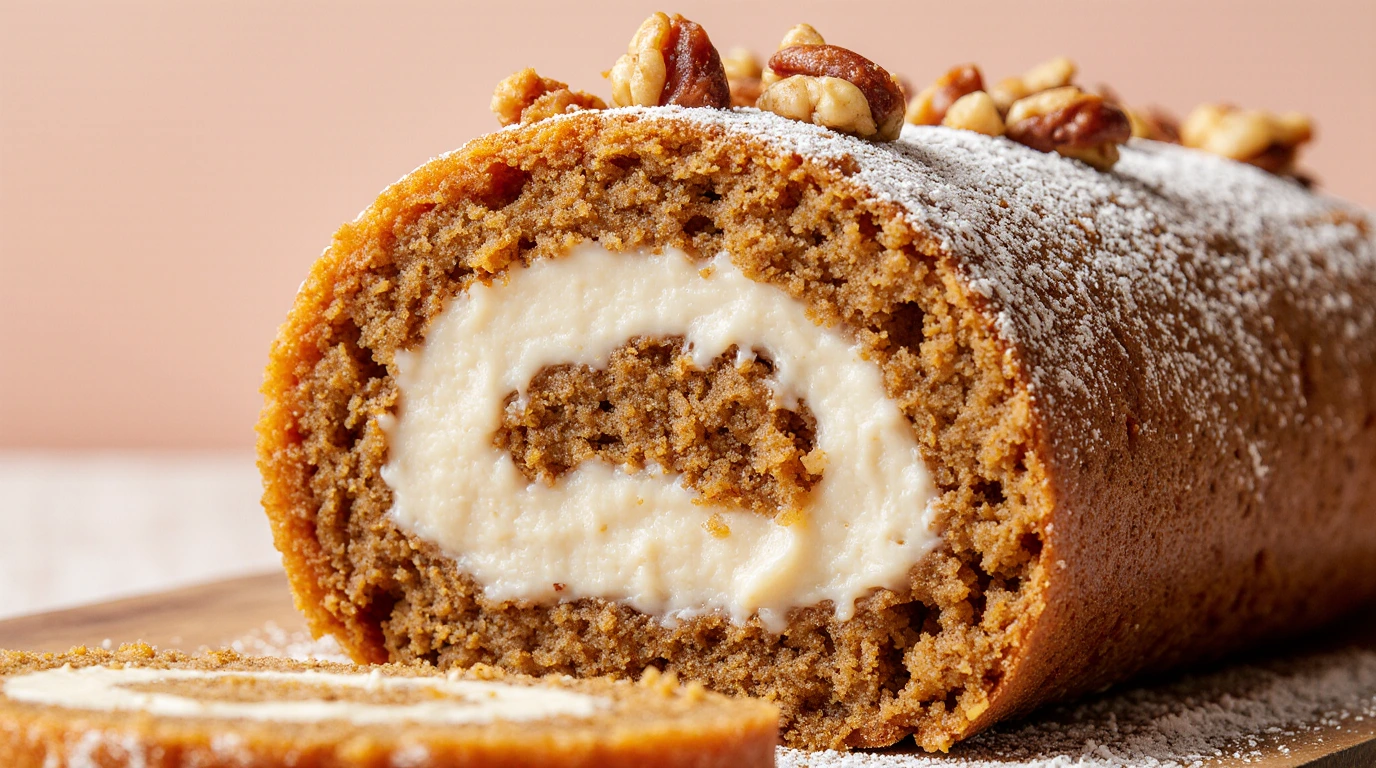
Carrot Cake Roll: 8 Easy Steps for Perfect Results
Table of Contents
Tired of carrot cake rolls that crack, stick to the pan, or turn out dry and dense? You’re not alone. This elegant dessert looks intimidating, but with the right technique, you’ll create a show-stopping Carrot Cake roll with a luscious cream cheese filling that impresses every time.
This recipe delivers a perfectly moist, spiced Carrot Cake rolled into a beautiful spiral—no cracks, no stress, just bakery-quality results. As a pastry chef with over 12 years of experience teaching home bakers, I’ve perfected this method through countless trials to eliminate every common pitfall.
In this guide, you’ll discover foolproof cake selection tips, essential rolling techniques, ingredient prep secrets, and expert troubleshooting advice. Plus, I’ll share pro tips for variations, storage hacks, and answers to your most pressing Carrot Cake roll questions.
Why This Carrot Cake Recipe Works
This Carrot Cake roll recipe transforms a classic dessert into an elegant presentation without complicated techniques or specialty equipment. Here’s why it consistently delivers perfect results:
- Uses everyday ingredients you already have: Pantry staples like flour, eggs, carrots, and cream cheese create exceptional flavor without a grocery store run
- Foolproof rolling method prevents cracks: My towel-rolling technique keeps the cake flexible and ensures smooth, professional-looking swirls every time
- Ready in under 90 minutes: From mixing to serving, this streamlined process fits busy schedules while delivering impressive results
- Naturally moist texture that never dries out: The perfect ratio of oil to eggs creates a tender crumb that stays soft for days
- Versatile for any occasion: Elegant enough for holidays, simple enough for Sunday dessert, and perfect for potlucks or gift-giving
Choosing the Right Carrot Cake Components
The quality of your ingredients directly impacts your Carrot Cake roll’s texture, flavor, and ease of rolling. Let’s break down what works best.
Best Carrots for This Recipe
Fresh, finely grated carrots are non-negotiable for a moist, flavorful Carrot Cake roll. Use medium-sized carrots with bright orange color—they contain optimal moisture and natural sweetness. Avoid pre-shredded packaged carrots, which are too dry and coated with anti-caking agents that affect texture.
Grate carrots using the small holes on a box grater or a food processor with the fine shredding disk. You’ll need about 1½ cups of packed grated carrots, which equals roughly 3 medium carrots. The finer the grate, the more evenly distributed the carrot flavor and the smoother your cake texture.
Flour Selection Tips
All-purpose flour creates the ideal structure for rolling without cracking. Cake flour produces too delicate a crumb that tears easily, while bread flour makes the roll too tough. Measure flour correctly by spooning it into your measuring cup and leveling off—scooping directly from the bag adds 20% more flour and creates a dry, dense cake.
For gluten-free Carrot Cake rolls, use a 1-to-1 baking blend containing xanthan gum. Bob’s Red Mill and King Arthur brands work particularly well, though the cake may be slightly more fragile during rolling.
Cream Cheese Quality Matters
Full-fat brick-style cream cheese (not spreadable or whipped) creates the perfect filling consistency. Philadelphia brand is the gold standard—it’s firm enough to hold its shape but spreads smoothly. Bring cream cheese to room temperature for 30-60 minutes before mixing to avoid lumps in your filling.
Low-fat or fat-free cream cheese contains more moisture and stabilizers that make the filling runny and prone to soaking into the cake. Invest in quality cream cheese—it’s the star of this dessert.
Ingredients & Prep
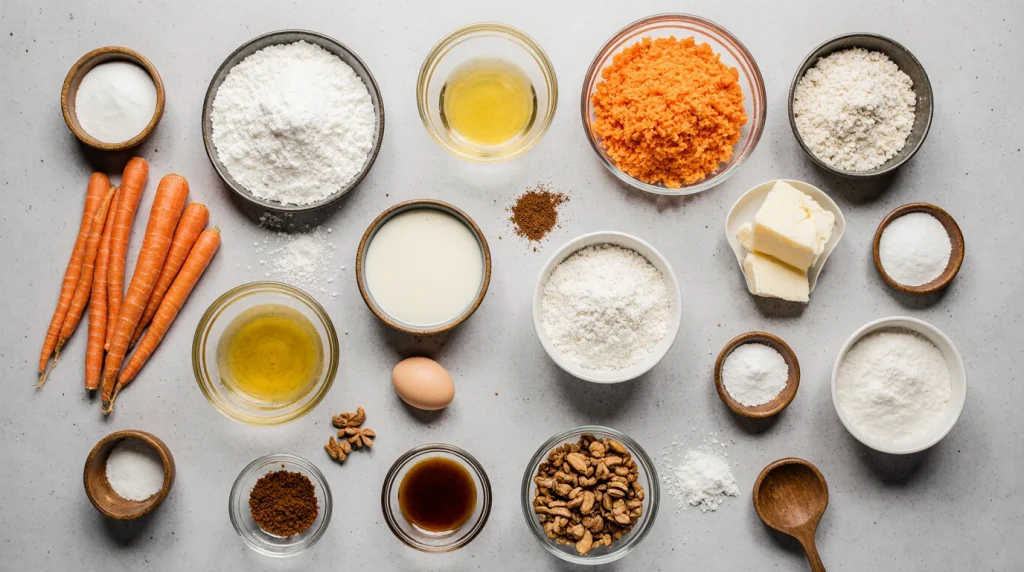
Carrot Cake Prep Essentials
For the Cake Roll:
- 3 large eggs (room temperature)
- ¾ cup granulated sugar
- ⅔ cup all-purpose flour
- 1 teaspoon baking powder
- 2 teaspoons ground cinnamon
- ½ teaspoon ground ginger
- ¼ teaspoon ground nutmeg
- ¼ teaspoon salt
- 1½ cups finely grated carrots (packed)
- ⅓ cup vegetable or canola oil
- 1 teaspoon pure vanilla extract
- Powdered sugar for dusting
Critical prep step: Line a 15×10-inch jelly roll pan with parchment paper, leaving 2 inches of overhang on short sides. Spray parchment lightly with cooking spray. This prevents sticking and makes removing the cake foolproof.
Bring eggs to room temperature quickly by placing them in warm (not hot) water for 5-10 minutes. Room temperature eggs incorporate more air, creating a lighter, more flexible Carrot Cake.
Cream Cheese Filling Essentials
For the Filling:
- 8 ounces cream cheese (softened)
- 4 tablespoons unsalted butter (softened)
- 1 cup powdered sugar (sifted)
- 1 teaspoon pure vanilla extract
- Pinch of salt
Beat cream cheese and butter together until completely smooth with no lumps—this takes 2-3 minutes with an electric mixer. Gradually add sifted powdered sugar to prevent a gritty texture. The filling should be spreadable but hold its shape.
Make filling while the cake bakes and cools so it reaches the ideal consistency for spreading.
Pantry Staples & Tools
Essential tools:
- Clean kitchen towel (not terry cloth—use flour sack or smooth cotton)
- Electric mixer (hand or stand)
- Rubber spatula
- Offset spatula for spreading filling
- Fine-mesh sieve for dusting
- Instant-read thermometer (optional but helpful)
Spice freshness matters: Ground spices lose potency after 6 months. Fresh cinnamon, ginger, and nutmeg deliver the warm, aromatic flavor that defines great Carrot Cake. If your spices smell weak, replace them.
Step-by-Step Cooking Instructions
Step 1: Pre-Baking Prep
Preheat your oven to 350°F (175°C) with the rack positioned in the center. Prepare your jelly roll pan as described above—proper pan prep is 80% of success.
Lay out a clean kitchen towel on your counter and generously dust it with powdered sugar, creating a 15×10-inch dusted area. This towel becomes your rolling surface, and the powdered sugar prevents sticking while adding a sweet coating.
Sift together flour, baking powder, cinnamon, ginger, nutmeg, and salt in a medium bowl. Sifting eliminates lumps and evenly distributes spices throughout your Carrot Cake.
Step 2: Making the Batter
Using an electric mixer, beat eggs on high speed for 3-4 minutes until thick, pale yellow, and tripled in volume. This whipping process incorporates air that makes the cake light and rollable. Gradually add granulated sugar while beating, then continue for another 2 minutes until the mixture forms ribbons when you lift the beaters.
Gently fold in the flour mixture using a rubber spatula—fold in thirds, rotating the bowl and using broad strokes from bottom to top. Over-mixing deflates the eggs and creates a dense cake. Stop as soon as no flour streaks remain.
Add grated carrots, oil, and vanilla extract. Fold gently until just combined—about 15-20 strokes. The batter should look fluffy with visible carrot shreds throughout.
Step 3: Baking to Perfection
Pour batter into your prepared pan and spread evenly to edges using an offset spatula. Tap the pan firmly on the counter twice to release air bubbles that cause uneven baking.
Bake for 12-15 minutes. The Carrot Cake is done when it springs back lightly when touched and a toothpick inserted in the center comes out clean. Don’t overbake—even one extra minute creates a dry cake that cracks when rolled.
Step 4: The Critical First Roll
Immediately after removing the cake from the oven, run a knife around the edges to loosen. Invert the hot cake onto your powdered-sugar-dusted towel. Carefully peel off the parchment paper—it should come away cleanly.
Starting from a short end, roll the cake and towel together into a tight spiral while the cake is hot. This “setting” step trains the Carrot Cake into its rolled shape without cracking. Roll with confidence—use both hands and maintain even pressure.
Place the rolled cake seam-side down on a wire rack and let it cool completely (45-60 minutes). The cake must cool fully rolled to maintain its shape memory.
Step 5: Filling and Final Roll
Once completely cool, carefully unroll the Carrot Cake—it will naturally want to stay curved, which is perfect. The towel should release easily thanks to the powdered sugar.
Using an offset spatula, spread the cream cheese filling evenly over the entire surface, leaving a ½-inch border on the far short edge. This border prevents filling from squeezing out when you roll.
Roll the cake again (without the towel this time), starting from the same short end. Roll gently but firmly, using the edge of the filling-free border as your stopping point. The filling will spread to the edges naturally.
Step 6: Chilling and Setting
Place the rolled Carrot Cake seam-side down on a serving platter. Cover loosely with plastic wrap and refrigerate for at least 2 hours or up to 24 hours. Chilling firms the cream cheese filling and allows the flavors to meld beautifully.
The refrigeration period also makes slicing much cleaner—warm cake and filling create messy, uneven slices.
Step 7: Final Presentation
Before serving, dust the entire roll generously with powdered sugar using a fine-mesh sieve. This creates a beautiful snow-dusted appearance and adds an extra touch of sweetness.
For extra decoration, garnish with crushed walnuts, a cream cheese drizzle, or small marzipan carrots on top. Keep decorations simple to showcase the elegant spiral inside.
Step 8: Slicing Perfection
Use a sharp serrated knife and wipe it clean between each cut for pristine slices. Cut 1-inch thick slices for standard servings or ¾-inch slices for more portions. Make smooth, gentle sawing motions without pressing down hard—pressure squashes the roll and smears the filling.
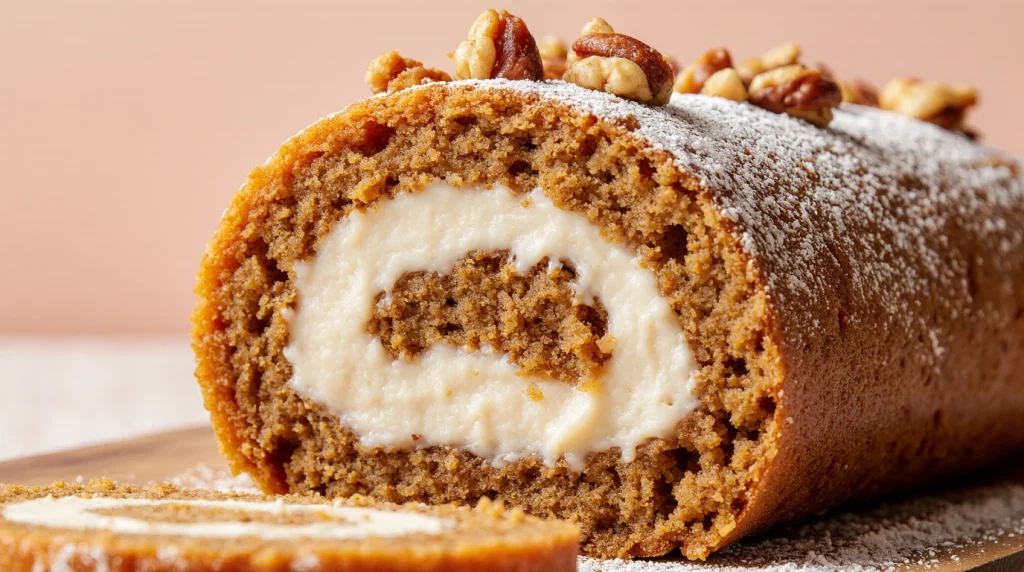
Serve slices on their side to display the beautiful spiral. Your Carrot Cake roll will reveal perfect cream cheese swirls that look professionally made.
Pro Tips for Perfect Carrot Cake
Avoiding Cracks and Tears
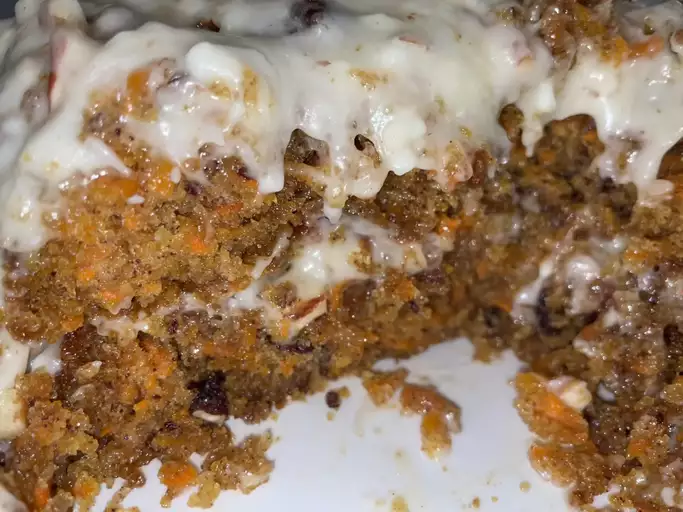
The number one cause of cracking is overbaking. Set a timer for 12 minutes and check every minute after. Your Carrot Cake should feel slightly springy but not firm—it continues cooking from residual heat after removal.
Roll the cake while hot—waiting even 2-3 minutes creates cracks as the surface begins drying. Have your powdered-sugar-dusted towel ready before the cake comes out of the oven.
If your cake does crack slightly during the final roll, place the crack on the bottom (seam side). A generous dusting of powdered sugar on top camouflages minor imperfections beautifully.
Tool Recommendations
Invest in a true jelly roll pan (15x10x1 inch)—cookie sheets with shallow sides don’t work. The Nordic Ware Natural Aluminum pan is affordable and perfect for even baking.
Use parchment paper, not wax paper or foil. Parchment withstands oven heat and prevents sticking without any greasy residue. Always have parchment overhanging both short sides for easy removal.
A bench scraper helps spread batter evenly and quickly in the pan. An offset spatula makes filling distribution effortless and prevents tearing the delicate cake.
Storage & Reheating
Store your Carrot Cake roll covered in the refrigerator for up to 5 days. The cake actually improves on day two as the spices bloom and the cream cheese filling sets perfectly.
Freeze whole or sliced for up to 3 months. Wrap tightly in plastic wrap, then aluminum foil to prevent freezer burn. Thaw overnight in the refrigerator for best texture—the cream cheese filling stays creamy without becoming watery.
Never microwave Carrot Cake roll—it makes the filling runny and the cake rubbery. Always serve cold or at cool room temperature for ideal texture and flavor.
Flavor Variations
Spiced Chai Twist
Transform your Carrot Cake roll with chai-inspired spices. Add ½ teaspoon ground cardamom, ¼ teaspoon ground cloves, and an extra ½ teaspoon cinnamon to the batter. Steep 2 chai tea bags in the oil for 10 minutes before adding to the batter (remove bags and squeeze excess oil back). The result is an aromatic, warming variation perfect for fall and winter celebrations.
Mix 1 tablespoon of honey into the cream cheese filling for complementary sweetness that enhances the chai spices.
Maple Pecan Carrot Cake
Replace ¼ cup of the granulated sugar with pure maple syrup for subtle maple flavor. Fold ½ cup of finely chopped toasted pecans into the batter just before baking. The nuts add delightful crunch and richness.
In the filling, substitute 2 tablespoons of the powdered sugar with maple sugar, and add ¼ cup of finely chopped toasted pecans. This creates a praline-inspired filling that pairs beautifully with the spiced Carrot Cake.
Tropical Pineapple Version
Add ½ cup of well-drained crushed pineapple (squeeze out excess moisture with paper towels) to the batter along with the grated carrots. Replace the ginger with ½ teaspoon of ground allspice.
Fold ¼ cup of sweetened shredded coconut into the cream cheese filling, and toast additional coconut to sprinkle on top instead of powdered sugar. This variation delivers island vibes with familiar Carrot Cake comfort.
Gluten-Free and Dairy-Free Options
Substitute all-purpose flour 1-to-1 with a gluten-free baking blend containing xanthan gum. Handle the batter more gently as gluten-free cakes are more delicate. Add an extra tablespoon of oil for moisture.
For dairy-free filling, use vegan cream cheese (Kite Hill or Miyoko’s brands work well) and vegan butter. Chill the filling for 30 minutes before spreading—dairy-free versions are softer and benefit from extra firming time.
Serving Suggestions
Perfect pairings for Carrot Cake roll:
Serve slices alongside a small scoop of vanilla bean ice cream or a dollop of freshly whipped cream. The cold creaminess contrasts beautifully with the spiced cake and creates a restaurant-quality presentation.
Fresh berries—especially raspberries or strawberries—add bright acidity that cuts through the richness of the cream cheese filling. Arrange berries artfully around each slice for a vibrant pop of color.
A warm cup of spiced chai tea, coffee, or hot apple cider complements the warm spices in Carrot Cake perfectly. For evening entertaining, pair with dessert wine like Moscato d’Asti or a cream sherry.
Make it a dessert board: Arrange sliced Carrot Cake roll on a large wooden board with clusters of candied pecans, fresh mint sprigs, caramel sauce for drizzling, and small cream cheese frosting rosettes piped decoratively. This creates an impressive centerpiece for gatherings.
For special occasions, serve individual slices on dessert plates with a light dusting of cinnamon, a drizzle of salted caramel, and a small marzipan carrot garnish. This elevated presentation showcases your baking skills beautifully.
FAQs
Can I make Carrot Cake roll ahead of time?
Absolutely! This dessert is ideal for advance preparation. Make the complete roll up to 2 days before serving and store covered in the refrigerator. The flavors actually deepen and improve as the cake rests. Dust with powdered sugar just before serving for the freshest appearance.
Why did my Carrot Cake crack when I rolled it?
Cracking happens for three main reasons: overbaking (even by 1-2 minutes), rolling when the cake is too cool, or under-beating the eggs. Ensure your cake is removed at exactly 12-15 minutes when it springs back lightly. Roll immediately while hot—the cake becomes brittle as it cools. Beat eggs for a full 3-4 minutes until tripled in volume to create the flexible structure needed for rolling.
Can I use pre-shredded carrots?
Fresh-grated carrots are strongly recommended. Pre-shredded carrots are coated with anti-caking agents and are much drier, which affects both texture and moisture. They also lack the natural carrot flavor you want in Carrot Cake. Grating fresh carrots takes only 5 minutes and makes a noticeable difference in quality.
How do I prevent the filling from being too runny?
Use full-fat brick cream cheese (not spreadable or whipped varieties) and ensure it’s only softened, not warm. Beat the cream cheese and butter until completely smooth before adding powdered sugar. If your filling seems soft, refrigerate it for 20-30 minutes before spreading—it will firm up perfectly. Never add milk or cream to the filling, which makes it too loose.
Can I freeze Carrot Cake roll?
Yes! Wrap the completed roll tightly in plastic wrap, then aluminum foil. Freeze for up to 3 months. Thaw overnight in the refrigerator, keeping it wrapped until fully thawed to prevent condensation from making the cake soggy. The texture remains excellent—the cream cheese filling stays creamy and the cake stays moist.
What if I don’t have a jelly roll pan?
A true 15×10-inch jelly roll pan with 1-inch sides is essential for this recipe. Cookie sheets with shallow rims won’t work—the batter is too thin and won’t bake properly. Quarter sheet pans (13×9 inches) are too small and will overflow. Jelly roll pans are inexpensive (under $15) and worth the investment for consistent results.
Is this Carrot Cake roll safe during pregnancy?
Yes, when all ingredients are properly handled. The eggs are fully cooked during baking, and the cream cheese filling contains no raw ingredients. Ensure your cream cheese is made from pasteurized milk (standard in the US). Store the finished roll properly in the refrigerator and consume within 5 days for optimal food safety.
Can I add nuts to the cake?
Yes, fold ½ cup of finely chopped walnuts or pecans into the batter just before baking. Chop nuts very finely—large pieces can create weak spots that tear when rolling. Toast nuts first for 5 minutes at 350°F to enhance flavor and create a better texture that won’t become soggy in the batter.
Conclusion
You now have everything you need to create a stunning Carrot Cake roll that rivals any bakery! This recipe combines foolproof techniques with delicious, warming spices and luxurious cream cheese filling for a dessert that impresses every time.
The beauty of this Carrot Cake roll is its versatility—make it for Easter celebrations, potluck dinners, holiday gatherings, or simply because you’re craving something special on a Sunday afternoon. Once you master the basic rolling technique, you’ll find yourself making variations throughout the year.
Fire up your oven and try this tonight! The process is more straightforward than you think, and the elegant presentation makes you look like a professional pastry chef. Your family and friends will be amazed when you slice into that perfect spiral.
Join over 8,000 home bakers who’ve fallen in love with this recipe and left glowing reviews! Share your Carrot Cake roll creations with us on social media using #PerfectCarrotCakeRoll—we love seeing your beautiful results.