
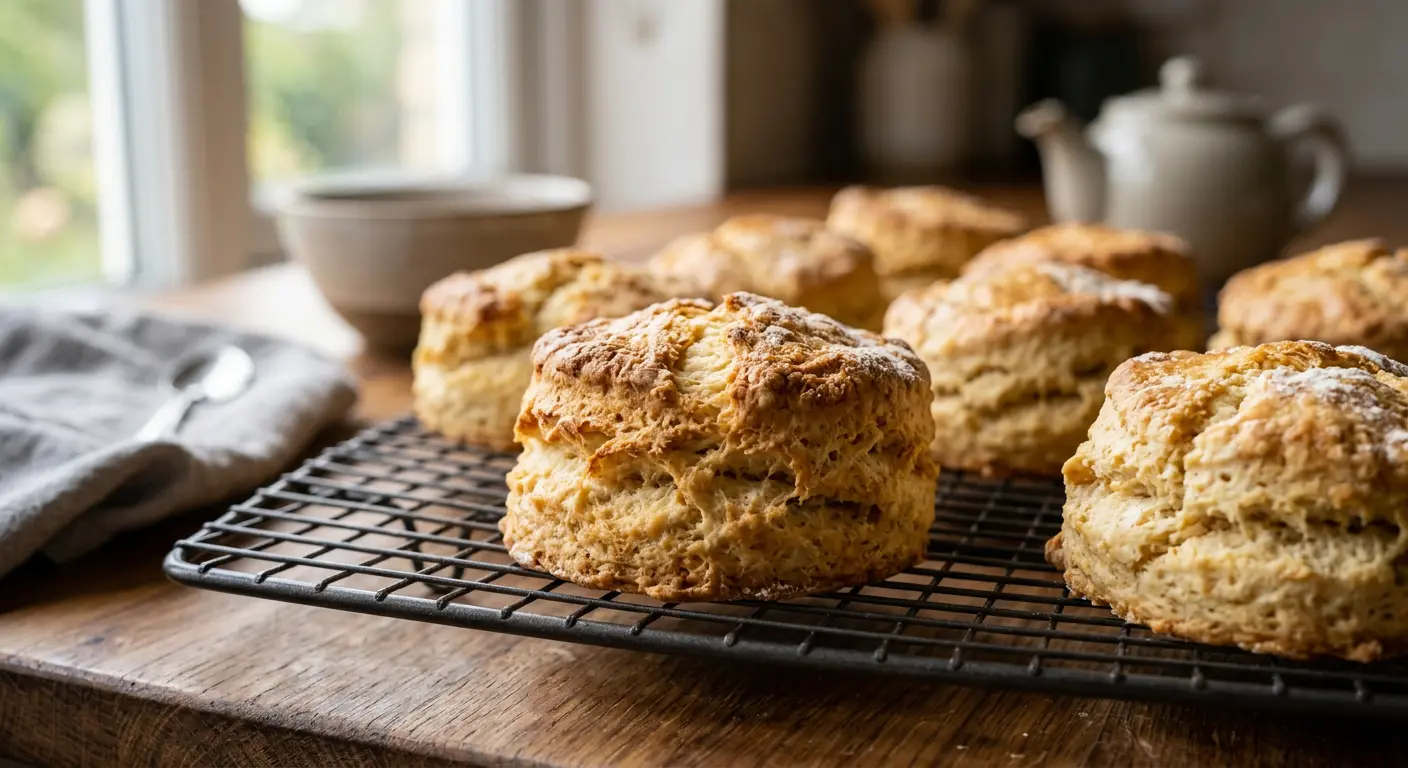
Easy Buttermilk Scones Recipe (Soft, Fluffy )
The Difference Between Scones and Biscuits
Many people confuse scones and biscuits because they look similar, but they are actually quite different in texture, flavor, and origin.
Scones are slightly sweet, richer, and often served with jam, cream, or fruit. They originated in the United Kingdom and are commonly enjoyed during afternoon tea. Their texture is tender and lightly crumbly, but sturdy enough to hold toppings.
Biscuits, on the other hand, are a Southern American staple. They are usually savory, extra flaky, and softer inside. Biscuits are often served with gravy, butter, or alongside savory dishes like fried chicken.
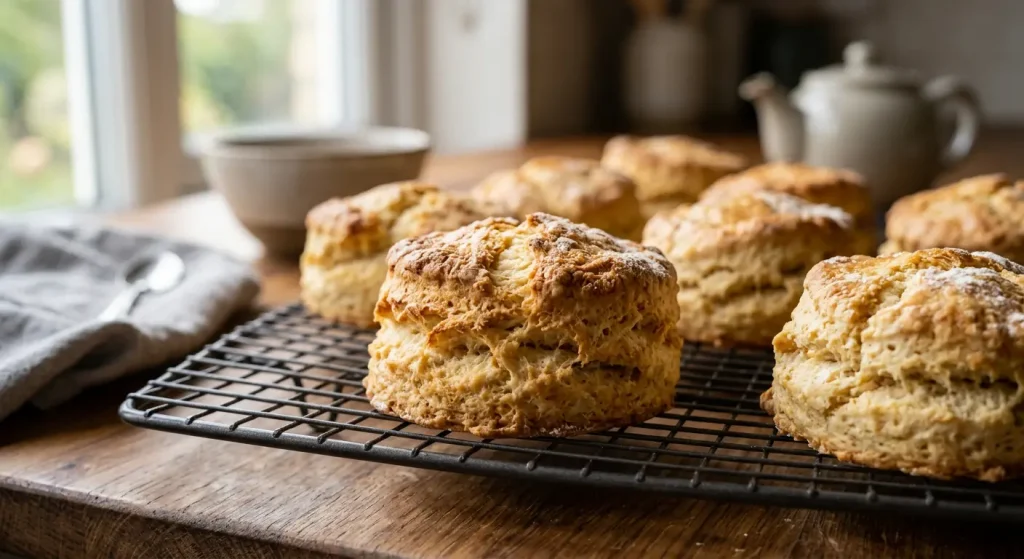
Key Differences:
- Sweetness: Scones are lightly sweet; biscuits are usually savory.
- Texture: Scones are crumbly and slightly dense; biscuits are fluffier and flakier.
- Add-ins: Scones often contain fruit, chocolate, or glaze; biscuits rarely include sweet mix-ins.
- Serving style: Scones are served with jam and cream; biscuits are served with butter or gravy.
While both use similar ingredients like flour, butter, and a leavening agent, technique and ratios make all the difference.
What You’ll Need for Your Buttermilk Scones Recipe
Making the best buttermilk scones requires simple pantry ingredients, but quality matters.
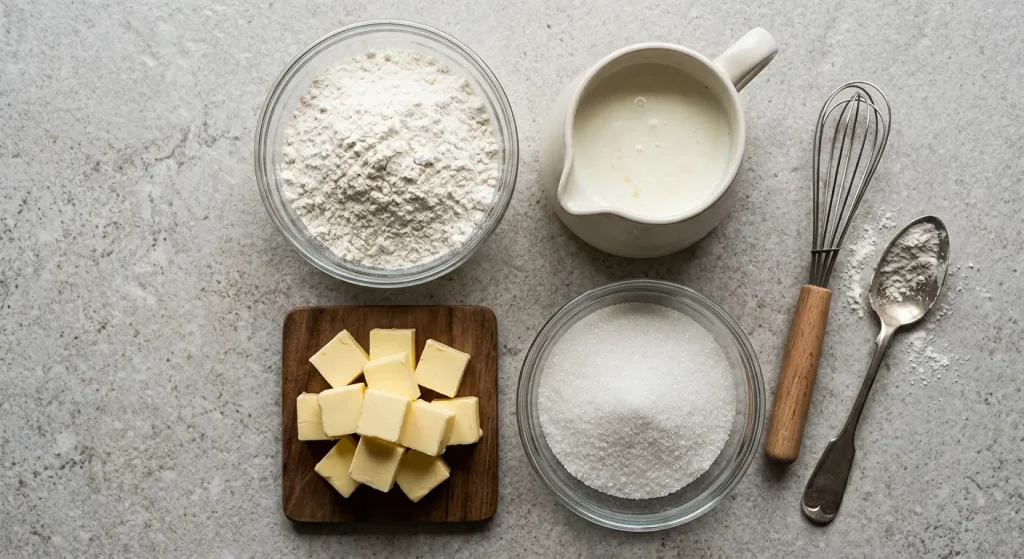
Ingredients:
- 2 cups all-purpose flour
- 1/4 cup granulated sugar
- 1 tablespoon baking powder
- 1/2 teaspoon salt
- 1/2 cup cold unsalted butter
- 3/4 cup cold buttermilk
- 1 teaspoon vanilla extract (optional)
- 1 egg (for egg wash)
Equipment:
- Large mixing bowl
- Pastry cutter (or fingertips)
- Baking sheet
- Parchment paper
- Sharp knife or biscuit cutter
Using cold ingredients and proper tools ensures bakery-style results.
Tips for the Best Scones
Perfect scones come down to technique. Here’s how to get them right every time.
Flour
Measure flour correctly by spooning it into the measuring cup and leveling it off. Too much flour leads to dry, dense scones.
For extra tenderness, you can substitute 2 tablespoons of flour with cornstarch.
Butter
Cold butter is non-negotiable.
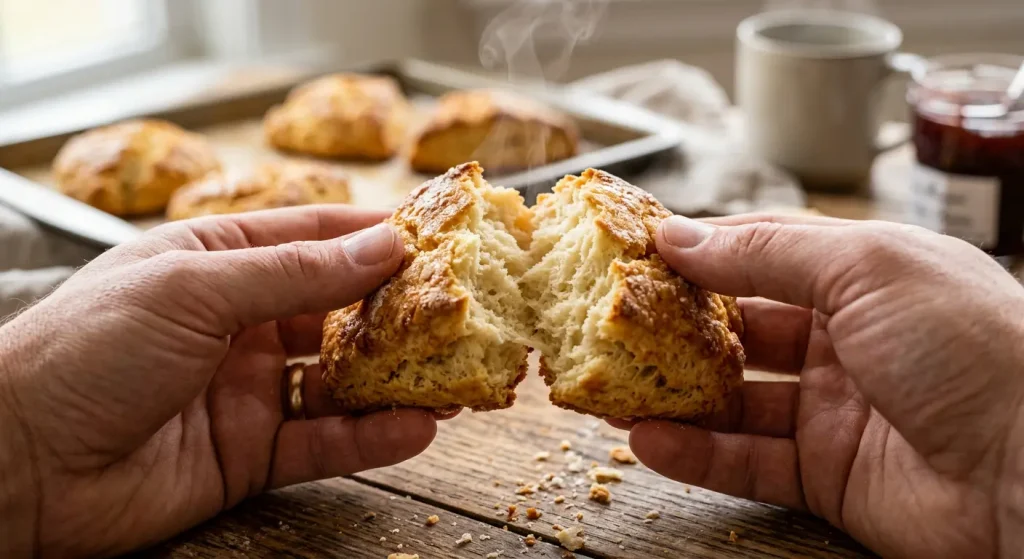
When small pieces of butter melt in the oven, they create steam pockets. This produces flaky, tender layers.
If your kitchen is warm, chill the dough for 10–15 minutes before baking.
Buttermilk
Buttermilk gives scones moisture and activates the baking powder for better rise.
Always use cold buttermilk. If you don’t have it, mix milk with lemon juice and let it sit for 5 minutes.
Mixing
Do not overmix the dough.
Mix just until combined. Overworking develops gluten, which makes scones tough instead of tender.
The dough should look slightly shaggy — not smooth like bread dough.
A Lightly Floured Surface
Turn the dough onto a lightly floured surface to prevent sticking.
Avoid adding too much flour during shaping, or your scones may become dry.
Shaping and Cutting
Pat the dough gently into a 1-inch thick circle.
Use a sharp knife to cut wedges or a round cutter for classic shapes.
Important: If using a cutter, press straight down without twisting. Twisting seals the edges and prevents proper rising.
Baking Tips
- Bake in a fully preheated oven (400°F / 200°C).
- Place scones close together for higher rise.
- Brush tops with egg wash for golden color.
- Bake until just golden — overbaking causes dryness.
Scones Recipes Variations
If you love buttermilk scones, you’ll probably enjoy these related baked treats.
Easy Mini Strawberry Cream Cake
Light vanilla sponge layers filled with fresh whipped cream and sweet strawberries. Perfect for spring gatherings or afternoon tea.
Lemon Victoria Sponge Sandwich Recipe
A classic British cake made with fluffy sponge layers and filled with lemon curd or jam and cream. Bright, soft, and refreshing.
Easy Layered Bread Rolls – Soft, Buttery & Crispy Recipe
Fluffy layered rolls with a buttery interior and lightly crisp exterior. Ideal for dinner tables or holiday meals.
Frequently Asked Questions About Buttermilk Scones
Can I make buttermilk scones without buttermilk?
Yes, you can make a simple substitute at home. Mix 3/4 cup of milk with 1 tablespoon of lemon juice or white vinegar. Let it sit for 5 minutes before using. This creates the acidity needed to help the scones rise and stay tender.
Why are my buttermilk scones dry or dense?
Dry or dense scones are usually caused by:
- Adding too much flour
- Overmixing the dough
- Using warm butter
- Overbaking
For soft and fluffy scones, measure flour carefully, keep ingredients cold, and mix just until combined.
Should butter be cold or melted for scones?
Always use cold butter. Cold butter creates steam pockets while baking, which results in flaky layers and a light texture. Melted butter will make the scones flat and dense.
How do I get my scones to rise higher?
To achieve tall, bakery-style scones:
- Use fresh baking powder
- Keep butter and buttermilk very cold
- Do not twist the cutter when shaping
- Place scones close together on the baking tray
- Bake in a fully preheated oven at 400°F (200°C)
Can I freeze buttermilk scones?
Yes, buttermilk scones freeze very well.
You can freeze them:
- Before baking: Freeze shaped dough and bake from frozen (add 2–3 minutes baking time).
- After baking: Store in an airtight container for up to 3 months.
Reheat in the oven at 300°F (150°C) for best texture.
How long do homemade scones stay fresh?
Freshly baked scones are best eaten the same day. However, you can store them in an airtight container at room temperature for up to 2 days, or in the refrigerator for 5 days.
What is the secret to soft and fluffy scones?
The secret to soft buttermilk scones is:
- Cold ingredients
- Gentle mixing
- Proper flour measurement
- High baking temperature
Avoid overworking the dough, as this develops gluten and makes scones tough.
Can I add fruit or chocolate to this buttermilk scones recipe?
Absolutely. This recipe is easy to customize. Popular add-ins include:
- Blueberries
- Strawberries
- Chocolate chips
- Lemon zest
- Raisins
Fold them gently into the dough before shaping.
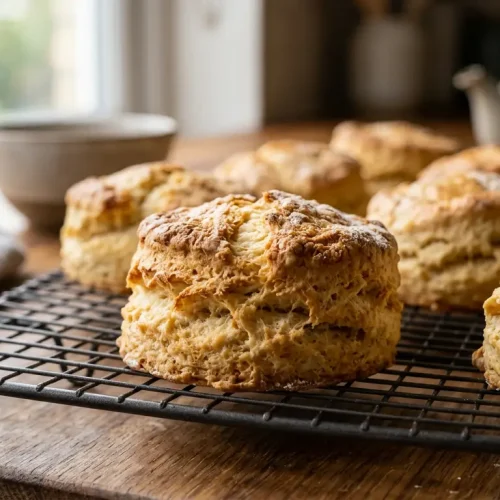
Best Buttermilk Scones Recipe
Equipment
- Large mixing bowl
- Pastry cutter (or fork)
- Measuring cups and spoons
- Baking sheet
- Parchment paper
- Sharp knife or bench scraper
- Pastry brush (for egg wash)
- Cooling rack
Ingredients
- 250 g 2 cups all-purpose flour
- 50 g 1/4 cup granulated sugar
- 1 tablespoon baking powder
- 1/2 teaspoon salt
- 115 g 1/2 cup cold unsalted butter, cubed
- 180 ml 3/4 cup cold buttermilk
- 1 teaspoon vanilla extract (optional)
- 1 egg (for egg wash, optional)
Optional Add‑Ins
- 1/2 cup chocolate chips
- 1/2 cup fresh blueberries
- 1/2 cup shredded cheddar (for savory version)
Instructions
- Preheat the oven to 400°F (200°C). Line a baking sheet with parchment paper.
- In a large bowl, whisk together flour, sugar, baking powder, and salt.
- Add the cold cubed butter. Using a pastry cutter or your fingertips, cut the butter into the flour until the mixture resembles coarse crumbs.
- Pour in the cold buttermilk and vanilla extract. Mix gently until just combined. Do not overmix.
- Transfer the dough onto a lightly floured surface. Gently pat into a 1-inch thick circle.
- Cut into 8 wedges (like pizza slices) or use a round cutter.
- Place scones on the prepared baking sheet. Brush tops with beaten egg for a golden finish (optional).
- Bake for 15–20 minutes or until golden brown.
- Let cool slightly before serving. Enjoy warm with jam and cream.
Storage
- Store at room temperature for up to 2 days.
- Freeze baked scones for up to 3 months.
- Reheat at 300°F (150°C) for 5–7 minutes.
Notes
- Keep butter and buttermilk very cold for flaky layers.
- Do not overwork the dough to keep scones soft and tender.
- For taller scones, chill the shaped dough for 10 minutes before baking.