
Lemon Victoria Sponge Sandwich Recipe
Table of Contents
The Ultimate Light and Creamy Lemon Layer Cake
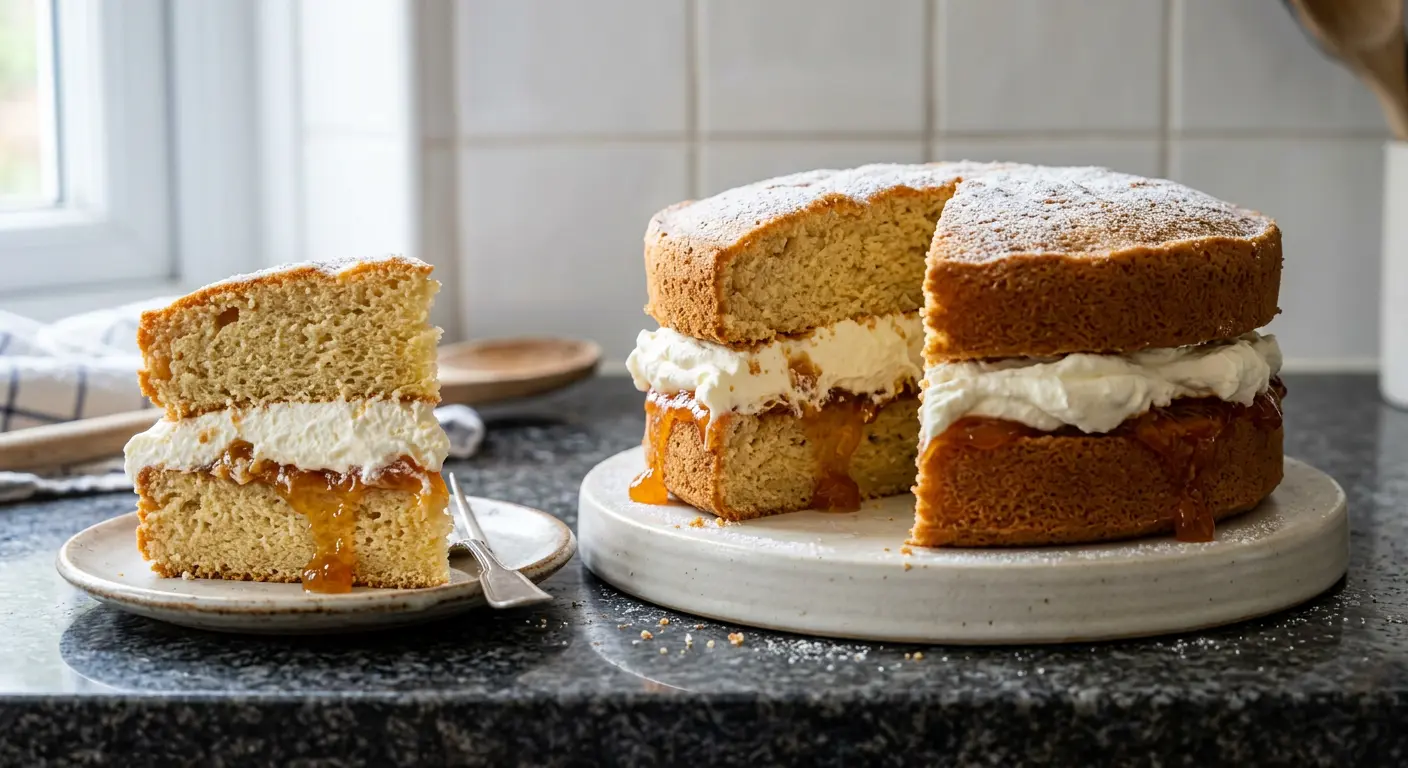
If you are looking for a classic cake with a fresh citrus twist, this Lemon Victoria Sponge Sandwich is the perfect choice. Inspired by the traditional British Victoria sponge, this version adds bright lemon zest, fresh lemon juice, a delicate homemade syrup, and a creamy lemon filling.
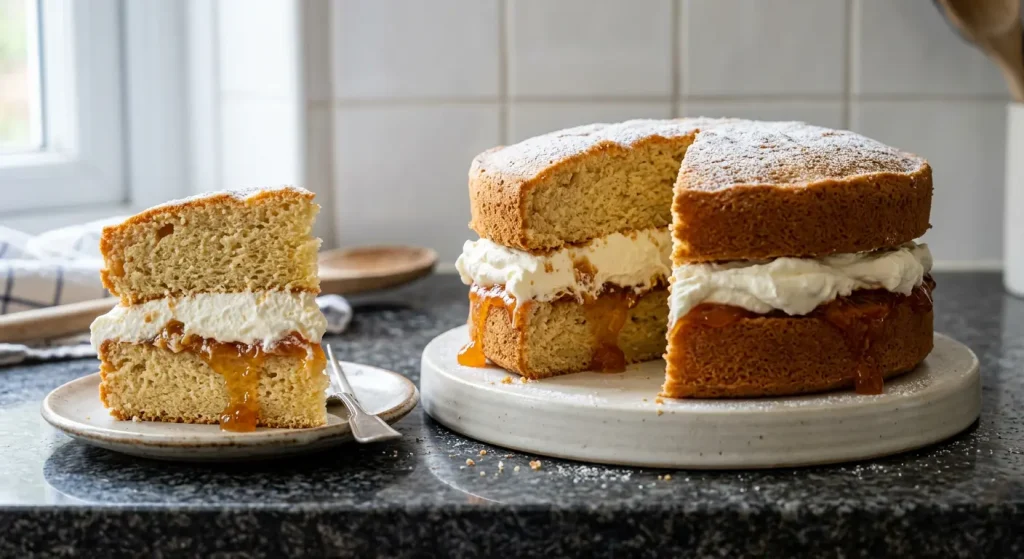
The result is a soft, buttery sponge layered with smooth lemon curd and lightly sweetened whipped cream. It’s elegant, balanced, and surprisingly simple to make at home.
Whether you are preparing dessert for guests, afternoon tea, or a special family gathering, this cake delivers both flavor and presentation.
Why This Lemon Victoria Sponge Is So Special
This cake stands out because of its texture and balance. The sponge layers are light and fluffy, not heavy. The lemon flavor is fresh and natural, not overpowering. The whipped cream adds softness, while the lemon curd brings a gentle tang that perfectly complements the sweetness.
Unlike complicated layer cakes, this recipe uses simple techniques and everyday ingredients. With clear steps and basic equipment, anyone can achieve a beautiful result.
Ingredients
For the Sponge Cakes
- 225 g (1 cup) caster or superfine sugar
- Zest of 2 lemons
- 225 g (1 cup) unsalted butter, softened
- 225 g (1½ cups) self-raising flour
- 1 teaspoon baking powder
- Pinch of salt
- 4 large eggs, room temperature
- 3 teaspoons fresh lemon juice
For the Lemon Syrup
- 2 tablespoons caster sugar
- 2½ tablespoons fresh lemon juice
For the Filling
- 180 g (¾ cup) lemon curd
- 250 ml (1 cup) heavy whipping cream
- 1 tablespoon icing sugar or caster sugar
- 1 tablespoon reserved lemon syrup
Step-by-Step Instructions
Step 1: Prepare the Oven and Pans
Preheat your oven to 180°C (160°C fan) / 355°F / Gas Mark 4.
Grease two 20 cm (8-inch) round sandwich tins with butter and line the bases with parchment paper.
Preparing the pans correctly ensures the cakes release easily after baking.
Step 2: Flavor the Sugar
Place the sugar in a bowl and add the lemon zest. Rub them together gently using your fingertips. This step releases the natural oils from the lemon peel, giving the cake a deeper citrus aroma.
This simple technique makes a noticeable difference in flavor.
Step 3: Make the Batter
In a large mixing bowl, beat the softened butter and lemon sugar until pale and creamy. This usually takes 1–2 minutes with an electric mixer.
Add the eggs one at a time, mixing on low speed after each addition. This helps prevent curdling and keeps the batter smooth.
In a separate bowl, sift together the self-raising flour, baking powder, and salt. Gradually add the dry ingredients to the butter mixture. Mix gently until just combined.
Add the lemon juice and give the batter a final brief mix. Do not overmix, as this can make the sponge dense instead of light.
Step 4: Bake the Sponge Layers
Divide the batter evenly between the two prepared tins. Smooth the tops with a spatula.
Bake for 20 to 25 minutes, or until the cakes are golden and a skewer inserted into the center comes out clean.
Let the cakes cool in their tins for 10 minutes. Then carefully transfer them to a wire rack and allow them to cool completely before assembling.
Step 5: Prepare the Lemon Syrup
In a small saucepan, combine the lemon juice and sugar. Heat gently over low heat until the sugar dissolves completely.
Set aside one tablespoon of the syrup for the filling. Use a pastry brush to lightly brush the remaining syrup onto the underside of both cake layers.
This step adds moisture and enhances the lemon flavor without making the cake soggy.
Step 6: Prepare the Filling
Choose one sponge layer to be the base. Spread the lemon curd evenly over the surface.
In a chilled bowl, whip the heavy cream with the icing sugar until soft peaks form. The cream should hold its shape but remain smooth. Avoid overwhipping, as it can become grainy.
Gently fold in the reserved tablespoon of lemon syrup.
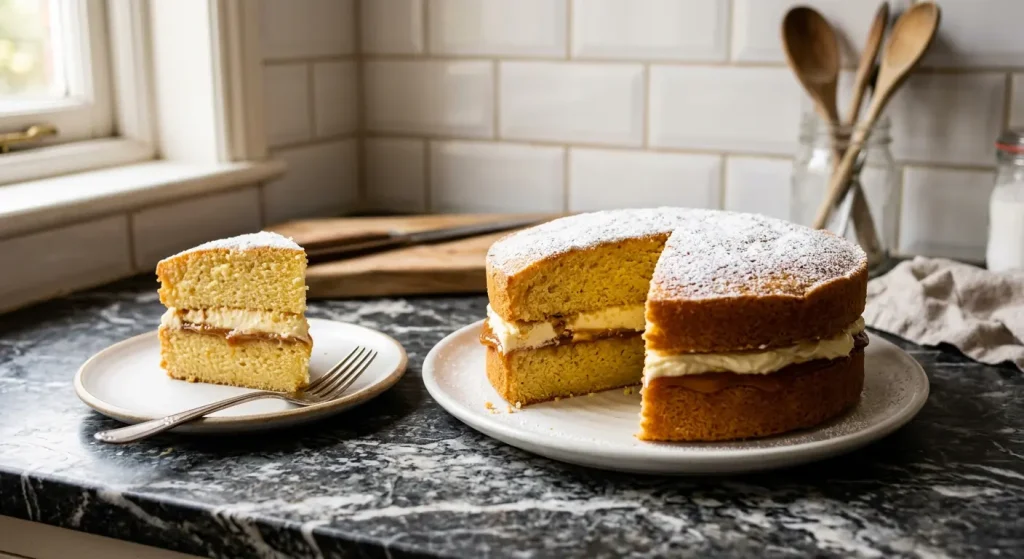
Spread or pipe the whipped cream over the lemon curd layer. Carefully place the second sponge layer on top.
Final Touch
Lightly dust the top of the cake with caster sugar or sifted icing sugar before serving. This simple decoration keeps the cake classic and elegant.
Storage Tips
- Store the cake in the refrigerator in an airtight container for up to 3 days.
- For best texture, allow it to sit at room temperature for 15–20 minutes before serving.
- The sponge layers can be baked one day in advance and filled the next day.
Helpful Tips for Best Results
- Always use room temperature eggs and butter.
- Weigh the batter in each tin to ensure even layers.
- Do not overmix after adding flour.
- For stronger lemon flavor, add extra zest to the whipped cream.
- If you do not have self-raising flour, use plain flour and add 2 teaspoons baking powder.
Frequently Asked Questions
Can I freeze the sponge layers?
Yes. Wrap them tightly in plastic wrap and freeze for up to one month. Thaw completely before filling.
Can I replace lemon curd?
You may use homemade lemon curd or a high-quality store-bought version for convenience.
Is this cake overly sweet?
No. The lemon juice and curd balance the sweetness beautifully.
Final Thoughts
This Lemon Victoria Sponge Sandwich combines simplicity with elegance. The soft sponge, fresh citrus flavor, and creamy filling create a cake that feels light yet satisfying.
It is a timeless recipe that works for birthdays, tea parties, holidays, or weekend baking. With easy steps and reliable results, this cake is perfect for both beginners and experienced bakers.
If you enjoyed this recipe, consider sharing it with friends or saving it for your next special occasion.
Recipe
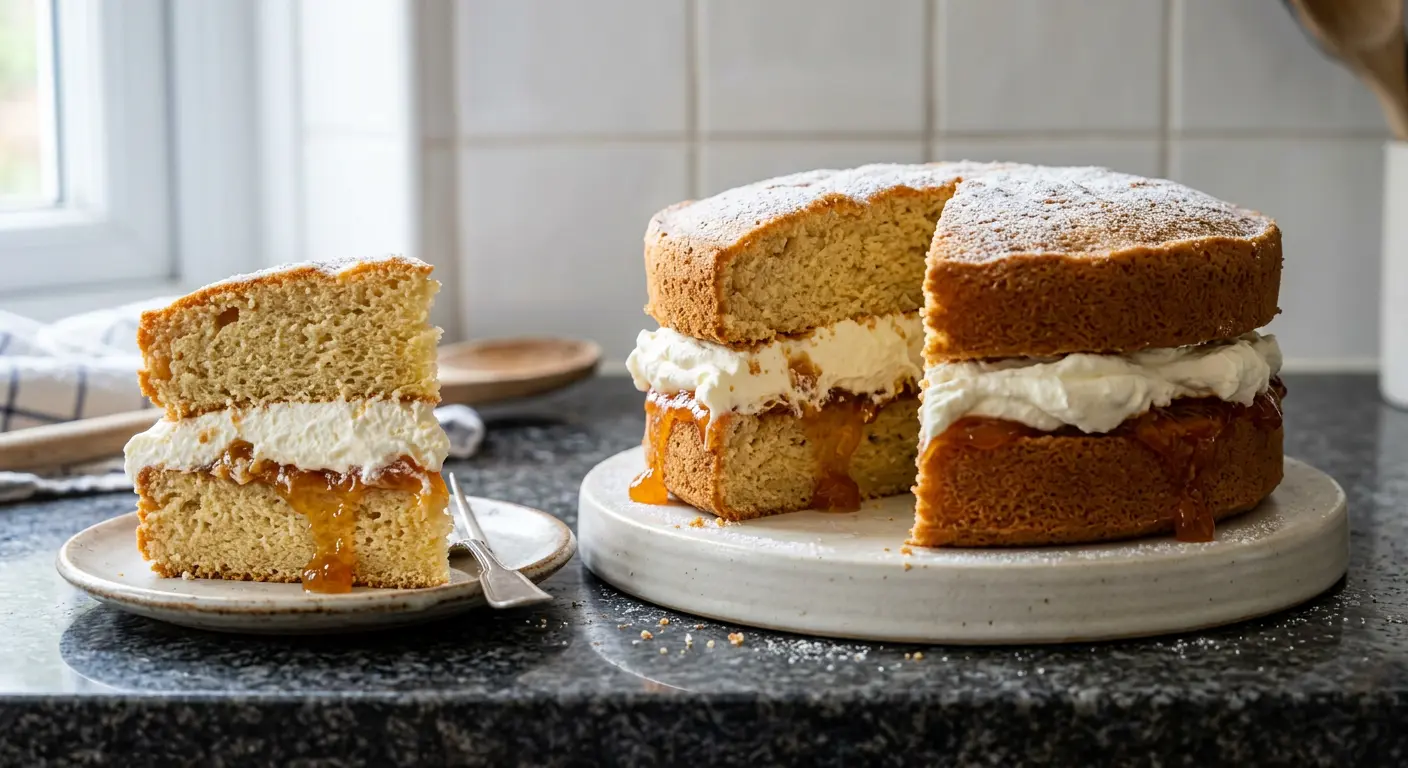
Lemon Victoria Sponge Sandwich
Ingredients
For the Sponge Cakes
- 225 g (1 cup) caster or superfine sugar
- Zest of 2 lemons
- 225 g (1 cup) unsalted butter, softened
- 225 g (1½ cups) self-raising flour
- 1 teaspoon baking powder
- Pinch of salt
- 4 large eggs, room temperature
- 3 teaspoons fresh lemon juice
For the Lemon Syrup
- 2 tablespoons caster sugar
- 2½ tablespoons fresh lemon juice
For the Filling
- 180 g (¾ cup) lemon curd
- 250 ml (1 cup) heavy whipping cream
- 1 tablespoon icing sugar or caster sugar
- 1 tablespoon reserved lemon syrup
Instructions
Prepare the Oven and Pans
- Preheat oven to 180°C (160°C fan) / 355°F / Gas Mark 4.Grease two 20 cm (8-inch) round cake tins and line the bases with parchment paper.
Flavor the Sugar
- Rub the lemon zest into the sugar using your fingertips until fragrant.
Make the Batter
- Beat butter and lemon sugar until pale and creamy (1–2 minutes).Add eggs one at a time, mixing on low speed.Sift together flour, baking powder, and salt. Gradually fold into the batter.Add lemon juice and mix briefly until combined. Do not overmix.
Bake
- Divide batter evenly between tins and smooth tops.Bake for 20–25 minutes, or until golden and a skewer comes out clean.Cool in tins for 10 minutes, then transfer to a wire rack to cool completely.
Prepare the Lemon Syrup
- Gently heat lemon juice and sugar in a small saucepan until sugar dissolves.Reserve 1 tablespoon for the filling.Brush remaining syrup over the underside of both cake layers.
Prepare the Filling
- Spread lemon curd evenly over one sponge layer.Whip cream with icing sugar until soft peaks form.Fold in reserved tablespoon of lemon syrup.Spread or pipe cream over the lemon curd.Top with second sponge layer.
Final Touch
- Dust with caster sugar or sifted icing sugar before serving.
Notes
- Use room temperature eggs and butter for best texture.
- Weigh batter in each tin for even layers.
- Do not overmix once flour is added.
- Store refrigerated for up to 3 days.
- Let sit at room temperature 15–20 minutes before serving.
- Sponge layers can be frozen (unfilled) for up to 1 month.