
Homemade Sourdough Baguettes (No Yeast) – Step‑by‑Step Guide
Table of Contents
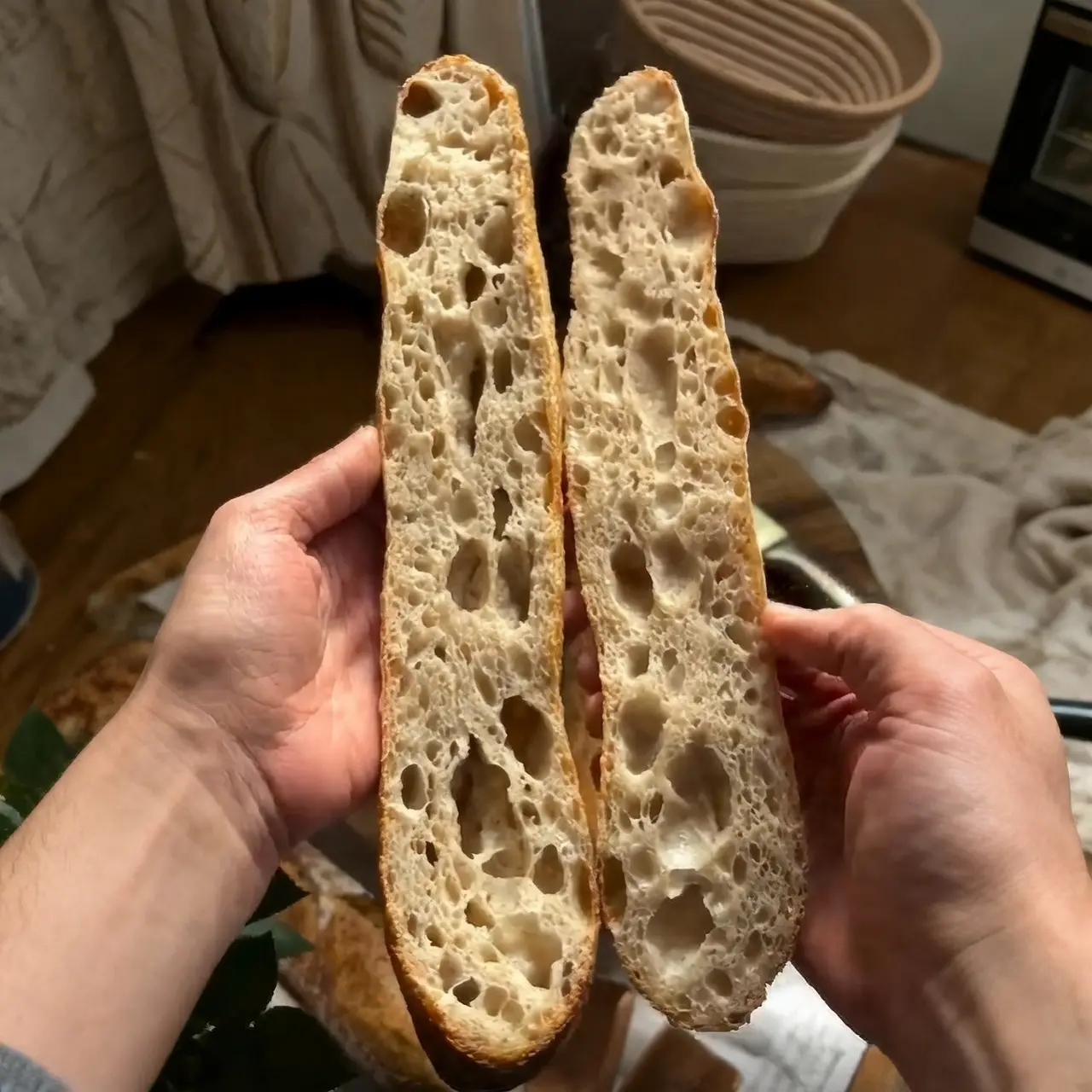
There’s nothing quite like homemade sourdough baguettes with a deeply caramelized crust and an airy, flavorful crumb. This naturally leavened baguette recipe uses a long fermentation process to develop incredible texture and aroma — without commercial yeast.
Whether you’re an experienced baker or just starting your sourdough journey, this method will guide you step by step to bakery-quality results at home.
Why You’ll Love This Recipe
- ✅ Naturally leavened with active sourdough starter
- ✅ Deep, complex flavor thanks to warm + cold fermentation
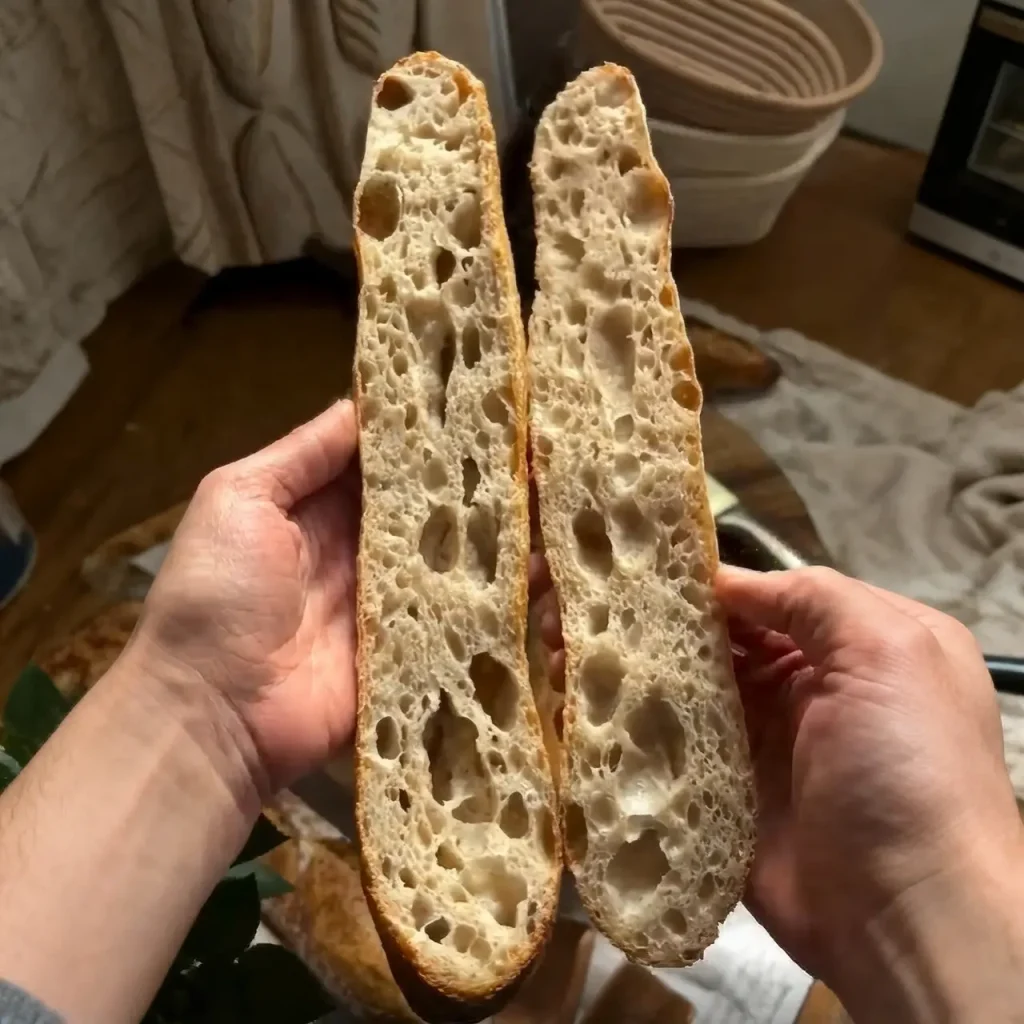
- ✅ Crispy crust with a light, open crumb
- ✅ Flexible timing options
- ✅ No commercial yeast required
This recipe combines whole wheat and bread flour for a balanced flavor and structure, resulting in beautifully blistered baguettes with a satisfying crunch.
Tools
To get the best results, prepare the following tools:
- Large mixing bowl
- Digital kitchen scale
- Dough scraper
- Bench scraper
- Baking stone or baking steel
- Parchment paper
- Lame or sharp blade for scoring
- Floured couche (or clean kitchen towel)
- Oven-safe tray for steam
Ingredients & Prep
Ingredients
- 120 g whole wheat flour
- 280 g bread flour,(or 140 g bread flour + 140 g all-purpose flour)
- 280 g water (room temperature)
- 200 g active sourdough starter (100% hydration)
- 10 g salt
Preparation Notes
- Your sourdough starter should be active and bubbly before mixing.
- Ideal room temperature: 21–22°C (70–72°F).
- If your kitchen is warmer, fermentation will move faster.
- If cooler, allow extra time for proper fermentation.
How to Make
1. Fermentolyse
Mix water, sourdough starter, and both flours until fully combined.
Cover and rest for 1 hour.
2. Add Salt
Add salt and mix thoroughly into the dough.
Rest 1 hour.
3. Coil Folds
Perform strength-building folds:
- First coil fold → Rest 1 hour
- Second coil fold → Rest 1 hour
- Third coil fold → Rest 1–2 hours (depending on temperature)
4. Cold Fermentation
Transfer the dough to the refrigerator for 12 hours.
Next Day
- Remove from fridge and let rest 30 minutes.
- Divide into 4 equal pieces and pre-shape.
Rest 30 minutes. - Shape into baguettes, creating surface tension.
Place seam side up on a floured couche.
Final proof: 1 hour. - Transfer seam side down onto parchment paper.
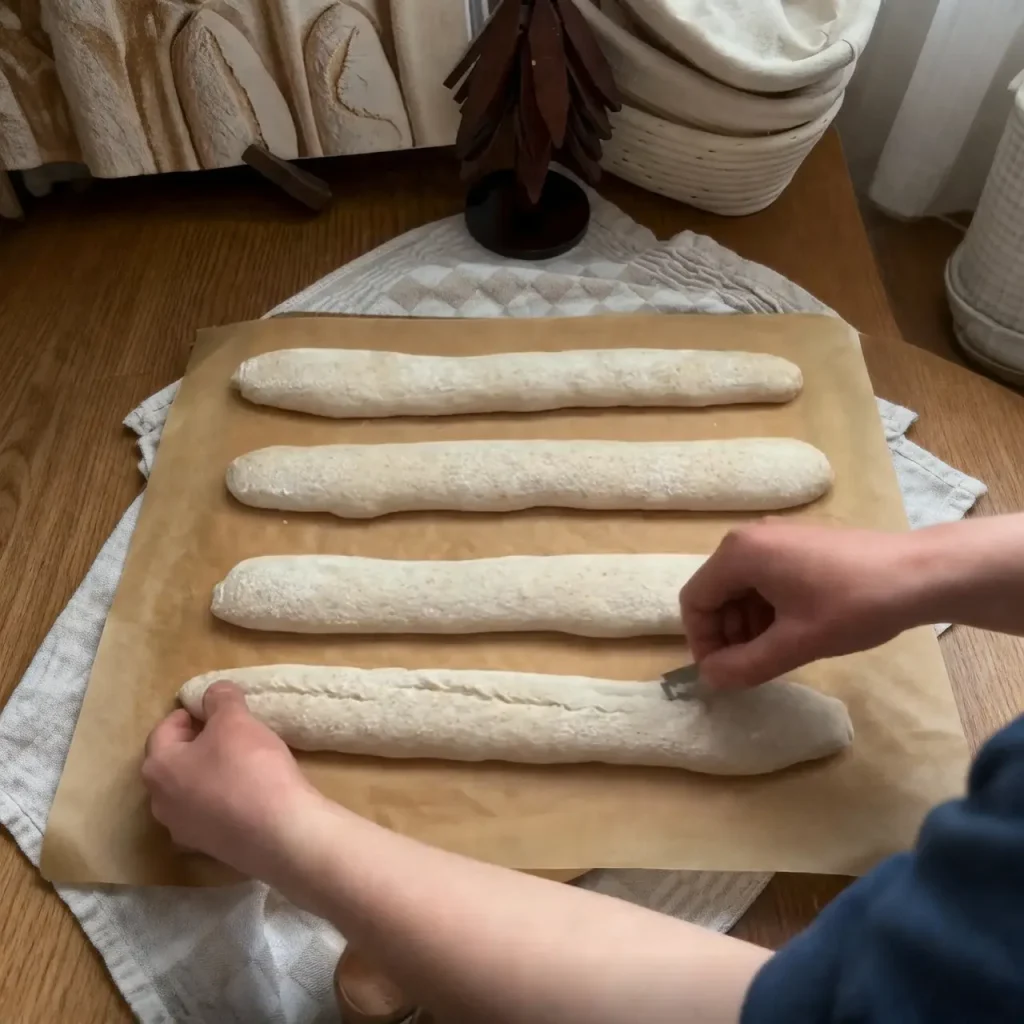
Score 3–4 slightly angled cuts.
Baking
- Preheat oven to 230°C (446°F) with baking stone/steel.
- Add steam and bake 12–15 minutes.
- Release steam, reduce temperature to 200°C (392°F).
- Bake another 12–15 minutes until golden brown.
Cool completely before slicing for the best texture.

Storage
- Store at room temperature in a paper bag for up to 24 hours.
- For longer storage, freeze once fully cooled.
- Reheat in a 200°C (392°F) oven for 5–8 minutes to refresh the crust.
Avoid plastic bags, as they soften the crust.
Similar Recipes
- Potato and Kashar Cheese Lava
- Easy No-Knead Bread Recipe (Soft & Fluffy)
- Rich Lemon Cake (Made with Whole Boiled Lemon)
- Dill & Cheese Buns | Easy No-Yeast Recipe
Frequently Asked Questions
Can I skip the cold fermentation?
Yes, but cold fermentation enhances flavor and improves structure. If skipping, extend bulk fermentation slightly and monitor the dough closely.
Can I use only all-purpose flour?
You can, but the texture may be slightly softer and less chewy. Bread flour gives better structure.
How do I know when fermentation is complete?
The dough should look airy, slightly domed, and feel elastic. It should pass the poke test during final proof.
Why is my baguette flat?
Possible reasons include:
- Weak gluten development
- Over-proofing
- Insufficient steam
- Weak starter
Can I shape and refrigerate overnight?
Yes. You can shape the baguettes on mixing day, refrigerate overnight, and bake directly in the morning.
Recipe

Artisan Sourdough Baguettes (Naturally Leavened)
Ingredients
- 120 g whole wheat flour
- 280 g bread flour or 140 g bread flour + 140 g all-purpose flour
- 280 g water room temperature
- 200 g active sourdough starter 100% hydration
- 10 g salt
Instructions
- Fermentolyse: In a large bowl, mix water, sourdough starter, and flours until fully combined. Cover and rest for 1 hour.
- Add Salt: Add salt and mix until fully incorporated. Rest for 1 hour.
- First Coil Fold: Perform one coil fold. Cover and rest for 1 hour.
- Second Coil Fold: Perform a second coil fold. Rest for 1 hour.
- Third Coil Fold: Perform a third coil fold. Rest 1–2 hours depending on room temperature.
- Cold Fermentation: Transfer dough to the refrigerator and ferment for 12 hours.
Next Day
- Warm Slightly: Remove dough from fridge and let rest for 30 minutes.
- Divide & Pre‑Shape: Divide into 4 equal pieces. Pre‑shape and rest 30 minutes.
- Shape: Shape into baguettes, creating surface tension. Place seam side up on a floured couche. Final proof 1 hour.
- Score: Transfer seam side down onto parchment paper and score 3–4 angled cuts.
- Bake: Preheat oven to 230°C (446°F) with baking stone/steel. Bake with steam for 12–15 minutes.
- Release steam, reduce to 200°C (392°F), and bake another 12–15 minutes until golden brown.
- Cool: Cool completely before slicing.
Notes
- Ideal room temperature: 21–22°C (70–72°F).
- Warmer kitchens shorten fermentation time.
- You can shape and refrigerate overnight, then bake in the morning.
- For best crust, bake with proper steam.