
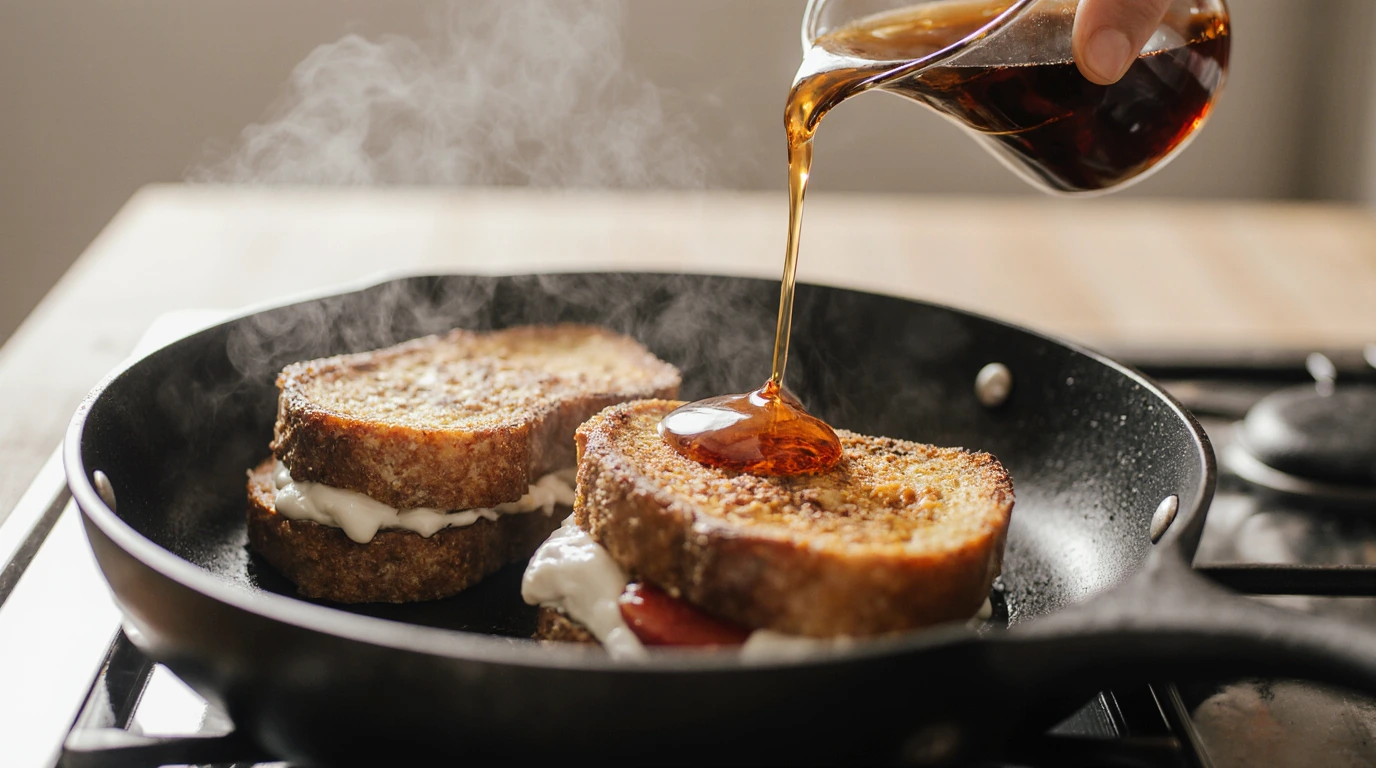
Stuffed French Toast: 5 Easy Recipes for Perfect Breakfast
Table of Contents
Tired of boring breakfast options that leave your family underwhelmed? Plain French toast is fine, but stuffed French toast transforms this breakfast staple into a show-stopping meal that’ll have everyone asking for seconds. Imagine biting into golden, crispy bread revealing pockets of cream cheese, fresh berries, or decadent Nutella.
After 12 years of perfecting brunch recipes in both professional kitchens and my home, I’ve discovered the secrets to creating stuffed French toast that’s crispy outside, custardy inside, and bursting with flavor in every bite. No soggy centers, no burnt edges—just consistently perfect results.
In this guide, you’ll discover 5 easy stuffed French toast recipes, essential bread selection tips, foolproof cooking techniques, creative filling combinations, and answers to every question about making this elevated breakfast at home. Whether you’re planning a special weekend brunch or want to upgrade your weekday mornings, these recipes deliver restaurant-quality results with minimal effort.
Why This Stuffed French Toast Recipe Works
These stuffed French toast recipes deliver consistently delicious results because they balance technique with convenience:
- Uses everyday bread from any grocery store – Thick-sliced sandwich bread, brioche, or challah work perfectly without specialty ingredients
- Prep in just 10 minutes – Quick assembly means you can create impressive breakfasts even on busy mornings
- Perfect for any occasion – Elegant enough for special brunches, simple enough for weekday breakfasts
- Customizable fillings – Swap ingredients based on preferences, dietary needs, or what’s in your fridge
- Make-ahead friendly – Assemble the night before and cook fresh in the morning for zero stress
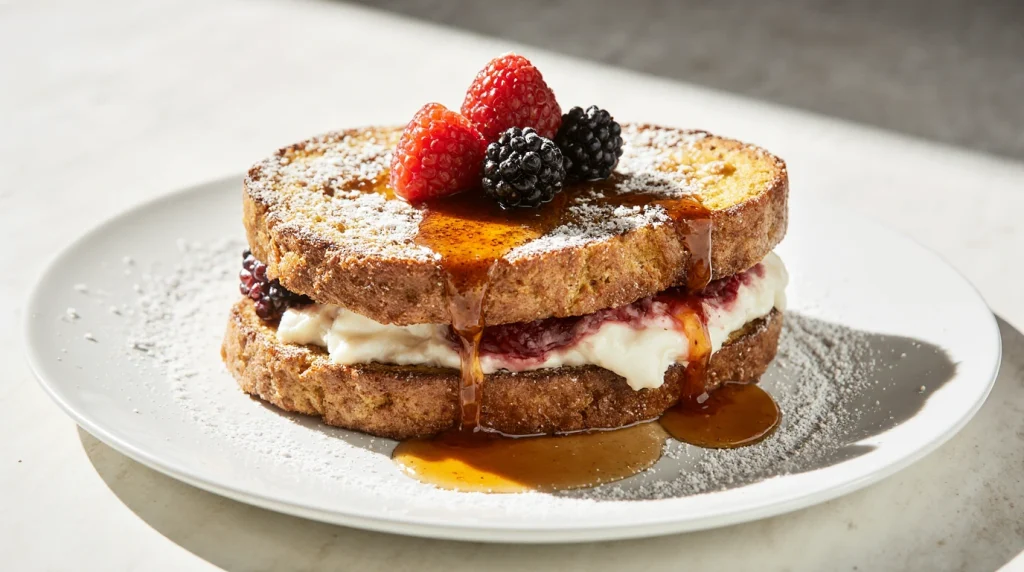
Choosing the Right Bread for Stuffed French Toast
The bread you choose makes or breaks stuffed French toast. The right type holds fillings securely while soaking up custard without falling apart.
Best Bread Types for This Recipe
Thick-sliced bread (at least ¾-inch to 1-inch thick) is essential for stuffed French toast because it creates a sturdy pocket that holds fillings without tearing. Brioche offers rich, buttery flavor and tender texture that becomes incredibly custardy. Challah provides slightly sweet taste with excellent structure for absorbing egg mixture. Texas Toast (pre-sliced extra-thick white bread) is the most affordable, accessible option that works beautifully.
Day-old bread actually works better than fresh because it’s slightly dried out, absorbing custard more evenly without becoming mushy. If using fresh bread, leave slices out uncovered for 2-3 hours or toast lightly before using.
Buying Tips for Perfect Results
Look for unsliced loaves at bakery sections so you can cut custom 1-inch thick slices. Pre-sliced “Texas Toast” from the bread aisle saves time and works excellently. Avoid thin sandwich bread (under ½-inch) as it tears when stuffed and becomes soggy rather than custardy.
Check the ingredient list for eggs and butter in brioche or challah—authentic versions contain both, creating superior flavor and texture. Store-brand challah often works just as well as expensive artisan versions for this recipe.
Bread Substitutions for Dietary Needs
Swap regular bread for gluten-free sandwich bread sliced thick (Canyon Bakehouse or Udi’s brands hold up well). Use sourdough for tangy flavor that balances sweet fillings beautifully. Try cinnamon-raisin bread for extra flavor without adding ingredients. Portuguese sweet bread offers rich, slightly sweet alternative similar to brioche at lower cost.
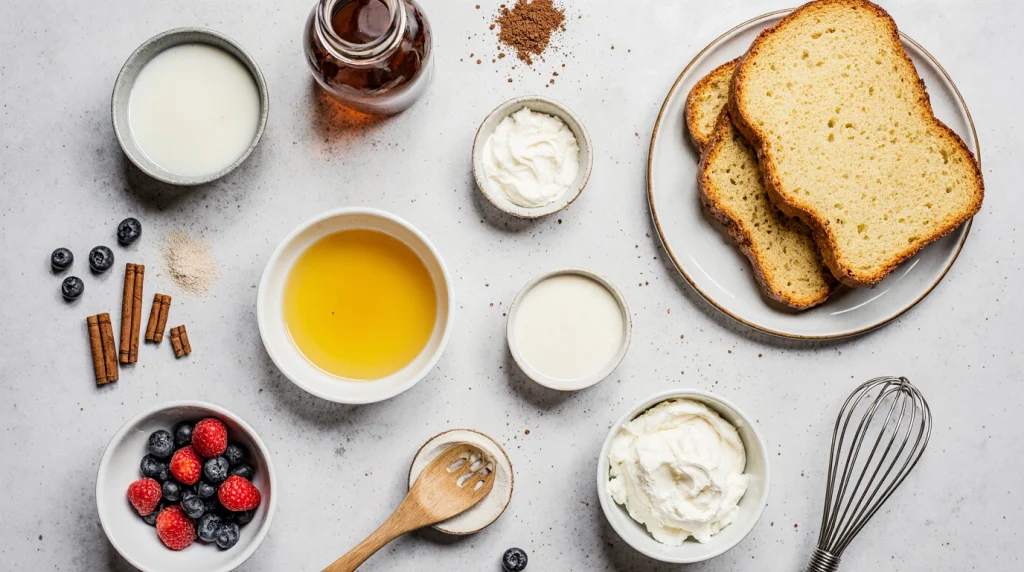
Ingredients & Prep
Bread Prep Essentials
For the base (serves 4):
- 8 thick slices bread (1-inch thick)
- 4 large eggs
- ¾ cup whole milk or half-and-half
- 2 tablespoons granulated sugar
- 1 teaspoon vanilla extract
- ½ teaspoon ground cinnamon
- Pinch of salt
- Butter for cooking
Preparing the bread: If using unsliced bread, cut eight 1-inch slices. For each serving, you’ll create a pocket by cutting a slit horizontally into the side of each slice, stopping about ½-inch from the edges to create a pouch. Don’t cut all the way through—you want a pocket, not two separate pieces.
The secret technique: Use a sharp serrated knife and make small sawing motions. Insert the knife at the bottom center of the slice and carefully work horizontally through the middle, creating a generous pocket for fillings.
Five Delicious Filling Combinations
1. Classic Cream Cheese & Strawberry
- 8 oz cream cheese, softened
- 3 tablespoons powdered sugar
- 1 teaspoon vanilla
- 1 cup sliced fresh strawberries
Beat cream cheese with sugar and vanilla until fluffy. Fold in strawberries gently.
2. Nutella & Banana
- ½ cup Nutella, at room temperature
- 2 ripe bananas, thinly sliced
- 2 tablespoons chopped hazelnuts (optional)
Mix Nutella until spreadable. Layer with banana slices.
3. Ricotta & Blueberry
- 1 cup whole milk ricotta
- 2 tablespoons honey
- Zest of 1 lemon
- ¾ cup fresh blueberries
Combine ricotta, honey, and lemon zest. Gently fold in blueberries.
4. Peanut Butter & Jelly
- ½ cup creamy peanut butter
- ½ cup grape or strawberry jam
- Optional: sliced bananas
Use at room temperature for easy spreading.
5. Savory: Ham, Cheese & Herb
- 4 thin slices deli ham
- ¾ cup shredded Gruyère or Swiss cheese
- 2 tablespoons chopped fresh chives
- Black pepper to taste
Omit sugar from custard for savory version. Add pinch of black pepper instead.
Custard Mixture Tips
Whisk eggs, milk, sugar, vanilla, cinnamon, and salt in a shallow dish until completely combined. The mixture should be smooth with no visible egg streaks. Let it sit for 2 minutes while you stuff the bread—this allows sugar to dissolve fully.
For richer stuffed French toast, replace half the milk with heavy cream. For lighter version, use 2% milk instead of whole milk.
Step-by-Step Cooking Instructions
Pre-Cooking Prep
Stuff each bread pocket with 2-3 tablespoons of your chosen filling, spreading it evenly throughout the pocket but not overfilling (which causes leakage during cooking). Press the opening closed gently.
Pour custard mixture into a shallow dish or pie plate. Working with one stuffed slice at a time, place bread in custard and let soak for 20-30 seconds per side. The bread should be saturated but not falling apart—thick bread needs this soaking time to absorb properly.
Cooking Method for Golden Perfection
Heat a large non-stick skillet or griddle over medium heat (about 325-350°F if using an electric griddle). Add 1 tablespoon butter, letting it melt and coat the surface evenly without browning.
Place soaked stuffed French toast in the pan—don’t overcrowd; cook 2-3 pieces at a time depending on pan size. Cook for 3-4 minutes on the first side without moving them. You’ll know they’re ready to flip when edges are golden and the bottom is deep golden brown.
Carefully flip using a wide spatula (support the entire slice to prevent filling from escaping). Cook the second side for 3-4 minutes until equally golden. Reduce heat slightly if browning too quickly—the inside needs time to cook through.
Doneness Check
The exterior should be deep golden brown with slight caramelization. When pressed gently with a spatula, stuffed French toast should feel set rather than jiggly or wet. For filled versions with cream cheese or ricotta, internal temperature should reach 160°F to ensure egg custard is fully cooked.
Cut into one piece to check—the bread should be custardy throughout (not raw or eggy in the middle), and filling should be warm and slightly melted.
Keeping Warm for Serving
Transfer finished stuffed French toast to a baking sheet in a 200°F oven while you cook remaining batches. This keeps them warm and slightly crispy without drying out. Don’t stack them directly on top of each other or they’ll steam and lose crispness.
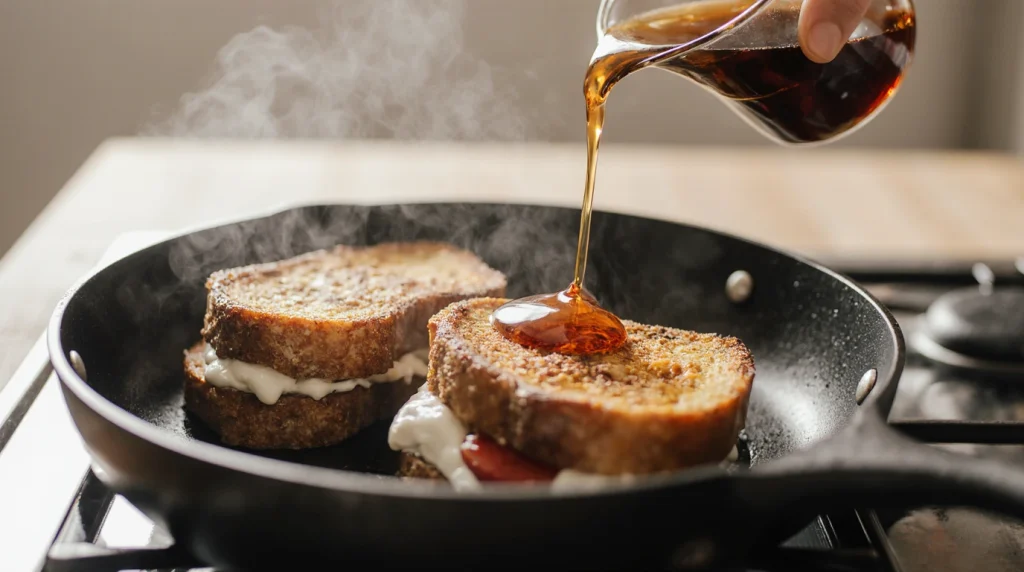
Pro Tips for Perfect Stuffed French Toast
Avoiding Soggy or Burnt Results
Don’t over-soak the bread. Even thick slices need only 20-30 seconds per side in custard. Over-soaking creates soggy centers that never fully cook. Set a timer if needed.
Control your heat carefully. Medium heat (325-350°F) is crucial—too high burns the outside while leaving custard raw inside, too low creates greasy, pale results. Watch your first piece and adjust accordingly.
Use enough butter but not too much. About 1 tablespoon per batch creates golden crust without greasiness. Add a bit more as needed, wiping out any burnt bits between batches.
Seal overstuffed pockets. If filling leaks out, you’ve added too much. Use 2-3 tablespoons maximum per pocket, and press edges firmly to seal before dipping in custard.
Tool Recommendations
A wide, thin spatula (fish spatula works perfectly) slides under stuffed French toast without breaking it. A shallow baking dish or pie plate makes soaking easier than a bowl. An electric griddle lets you cook 6-8 pieces simultaneously at controlled temperature—perfect for feeding a crowd.
A pastry bag or zip-top bag with corner snipped makes filling pockets cleaner and easier, especially for spreads like Nutella or peanut butter. A digital thermometer ensures perfect doneness if you’re uncertain about timing.
Storage & Reheating
Refrigerate: Cool completely, then wrap individual pieces in plastic wrap or store in airtight container for up to 3 days. Reheat in a 350°F oven for 8-10 minutes or in a toaster oven until heated through and crispy.
Freeze: Wrap cooled stuffed French toast individually in plastic wrap, then place in freezer bags. Freeze up to 2 months. Reheat from frozen in a 350°F oven for 15-20 minutes, or thaw overnight and reheat as above.
Make-ahead strategy: Stuff bread pockets and prepare custard the night before. Store separately in refrigerator. In the morning, dip and cook fresh—takes just 15 minutes for hot breakfast.
Avoid microwaving: This makes stuffed French toast rubbery and soggy. Always reheat in oven or toaster oven for best texture.
Flavor Variations
Seasonal Twists
Fall Apple Cinnamon: Fill with cream cheese mixed with diced sautéed apples, cinnamon, and brown sugar. Add ¼ teaspoon nutmeg to custard mixture.
Summer Berry Medley: Combine mascarpone with mixed berries (strawberries, blueberries, raspberries) and touch of honey. Dust finished toast with powdered sugar.
Holiday Eggnog: Replace milk in custard with eggnog and add pinch of nutmeg. Fill with sweetened ricotta and dried cranberries.
Dietary-Friendly Options
Keto/Low-Carb: Use low-carb bread (1-2g net carbs per slice), swap sugar for erythritol or monk fruit sweetener in both custard and fillings. Cream cheese and berry filling works perfectly for keto.
Dairy-Free: Use thick sliced dairy-free bread, coconut milk or almond milk in custard, and dairy-free cream cheese alternatives. Peanut butter and jelly filling is naturally dairy-free.
Vegan: Replace eggs with flax eggs (1 tablespoon ground flax + 3 tablespoons water per egg, let sit 5 minutes). Use plant milk and vegan butter. Fill with nut butter, jam, or dairy-free chocolate spread.
Global-Inspired Flavors
Mexican Chocolate: Add 1 tablespoon cocoa powder and ¼ teaspoon cayenne to custard. Fill with chocolate-hazelnut spread and sprinkle with cinnamon.
Italian Cannoli Style: Fill with sweetened ricotta mixed with mini chocolate chips and orange zest. Dust with powdered sugar before serving.
French Monte Cristo: The savory version—fill with ham, Gruyère, and Dijon mustard. Omit sugar from custard, add black pepper. Serve with maple syrup for dipping (the sweet-savory combo is traditional).
Tropical Hawaiian: Fill with cream cheese mixed with crushed pineapple (well-drained) and shredded coconut. Add ½ teaspoon coconut extract to custard.
Serving Suggestions
Stuffed French toast is substantial enough to be the star of breakfast, but thoughtful accompaniments elevate the entire meal.
For sweet versions: Serve with pure maple syrup, whipped cream, fresh berries, or fruit compote. Dust with powdered sugar through a fine-mesh sieve for elegant presentation. Add crispy bacon or breakfast sausage for protein and salty contrast.
For savory versions: Pair with fresh fruit salad, simple green salad, or roasted breakfast potatoes. The French Monte Cristo style is traditionally served with maple syrup for dipping—the sweet-savory combination is surprisingly delicious.
Beverage pairings: Serve with fresh-squeezed orange juice, strong coffee, or hot chocolate for morning meals. For brunch entertaining, pair with mimosas, Bloody Marys, or champagne cocktails.
Garnishing ideas: Top with a small scoop of vanilla ice cream for dessert breakfast, drizzle with chocolate or caramel sauce, scatter fresh mint leaves for color, or add a dollop of Greek yogurt for tang.
Plating tip: Cut each stuffed French toast diagonally to show the filling layers. Stack two halves slightly offset on the plate with garnishes alongside for restaurant-quality presentation.
FAQs
Can I use frozen bread for stuffed French toast? Yes! Frozen bread actually works beautifully because it’s already slightly dried out. Let thick slices thaw completely at room temperature (about 30 minutes), then cut pockets and proceed with the recipe. Don’t microwave to thaw as this creates uneven moisture.
How do I prevent the filling from leaking out? Use only 2-3 tablespoons of filling per pocket, spread it evenly, and don’t overfill. Press the opening firmly closed before dipping in custard. Avoid watery fillings—drain any liquid from fresh fruit and ensure cream cheese mixtures are thick, not runny.
Can I make stuffed French toast ahead of time? Absolutely! Stuff the bread pockets up to 24 hours ahead and refrigerate covered. Prepare custard mixture and store separately. In the morning, dip and cook fresh. For fully cooked make-ahead, prepare completely, cool, and refrigerate up to 3 days or freeze up to 2 months. Reheat in oven.
Why is my stuffed French toast soggy in the middle? You’re either over-soaking the bread (keep it to 20-30 seconds per side) or cooking at too high heat, which browns the outside before the inside cooks through. Use medium heat and give each side 3-4 minutes. Thicker bread needs patience to cook properly.
What’s the best filling that won’t make the toast soggy? Cream cheese-based fillings are ideal because they’re thick and stable. Avoid very juicy fresh fruits or watery jams. If using fresh berries, toss with a tablespoon of cornstarch first to absorb excess moisture, or use them as a topping instead of filling.
Can pregnant women eat stuffed French toast? Yes, when fully cooked. Ensure the egg custard reaches 160°F internal temperature so there’s no runny egg remaining. Use pasteurized eggs and dairy products, and cook filling ingredients thoroughly if using meat (like ham in savory versions).
How do I cut the pocket without cutting through the bread? Use a sharp serrated knife and work slowly. Insert the knife at the bottom center of the bread slice at the midpoint height. Keep the knife parallel to your cutting board and carefully saw back and forth horizontally, stopping ½-inch from all edges. Practice on one slice first if you’re nervous.
Can I use egg whites only for a healthier version? You can, but the texture won’t be as rich and custardy. Use 8 egg whites (about 1 cup) in place of 4 whole eggs. The coating will be slightly thinner and less golden. Add 1 tablespoon of melted butter to the custard mixture to improve richness and browning.
Conclusion
Transform your breakfast routine and wake up your family with these incredible stuffed French toast recipes! Whether you choose classic cream cheese and strawberries or adventurous Nutella banana, you’re just 20 minutes away from a breakfast that feels special enough for celebrations yet simple enough for any morning.
Join over 18,000 home cooks who’ve discovered that stuffed French toast isn’t complicated restaurant food—it’s an easy, impressive breakfast anyone can master. These five recipes give you endless options for customization based on your family’s preferences, dietary needs, and what’s already in your kitchen.
Ready to explore more elevated breakfast recipes? Try our [Classic Buttermilk Pancakes from Scratch] for another weekend brunch favorite, or check out [Easy Homemade Cinnamon Rolls] that use similar techniques for creating bakery-quality results at home.
We’d love to see your creations! Share photos of your stuffed French toast and tag us with your favorite filling combination. Which of these five recipes will you try first? Happy cooking!