
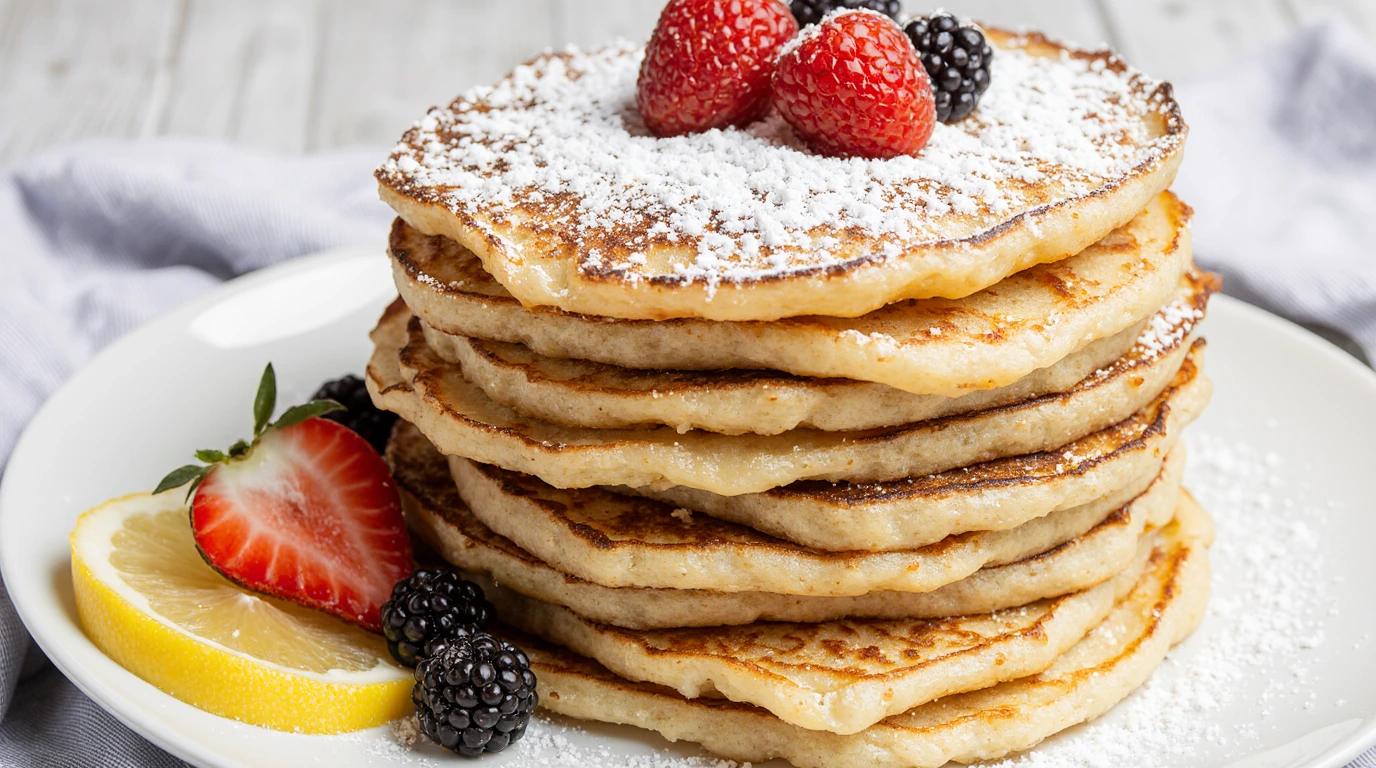
Classic French Crepes
Table of Contents
Tired of thick, rubbery pancakes that sit heavy in your stomach? Classic French crepes offer the delicate, paper-thin alternative you’ve been craving. These elegant French crepes transform simple ingredients into restaurant-quality breakfast, dessert, or even savory dinner options that’ll impress everyone at your table.
After perfecting my crepe technique over 8 years of culinary exploration—from Parisian cafés to my home kitchen—I’ve distilled the secrets to creating impossibly thin, golden crepes with lacy edges every single time. No specialized equipment needed, just the right technique.
In this comprehensive guide, you’ll discover foolproof batter consistency tips, essential French crepes cooking hacks, ingredient selection strategies, and answers to every question you’ve had about making authentic French crepes at home.
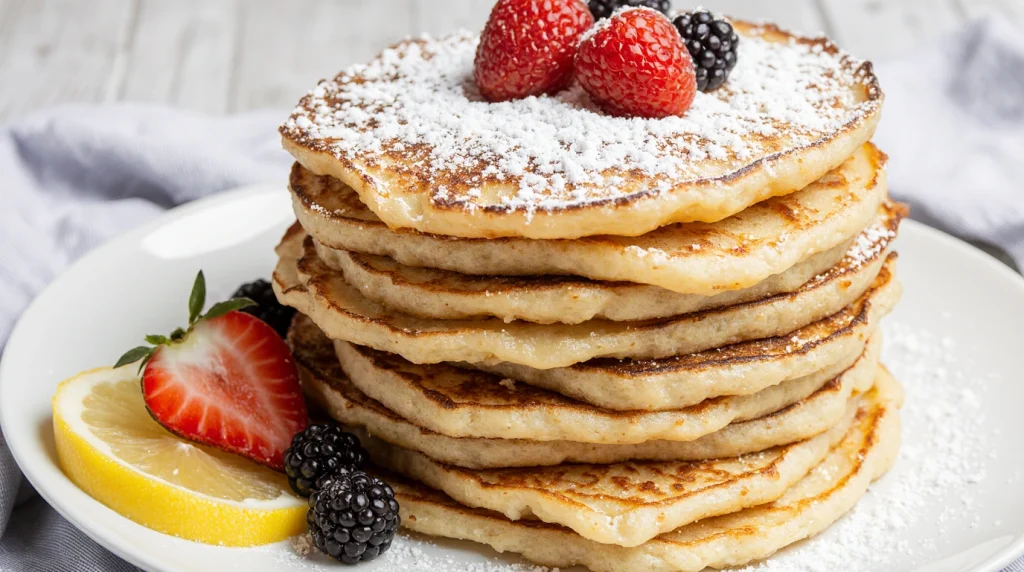
Why This French Crepes Recipe Works
This French crepes recipe delivers consistent, delicious results because it balances traditional technique with modern convenience:
- Uses everyday pantry ingredients – All-purpose flour, eggs, milk, and butter create authentic flavor without specialty items
- Rests for just 30 minutes – Brief resting time develops gluten for flexible crepes that won’t tear
- Versatile for any meal – Perfect base for sweet Nutella spreads, savory ham and cheese, or elegant fruit compotes
- Beginner-friendly technique – Simple swirling method works in any non-stick pan (no special crepe maker required)
- Makes 12-15 crepes – Feed a family or meal-prep breakfast for the entire week
Choosing the Right Ingredients for French Crepes
Success with French crepes starts at the grocery store. The right ingredient choices make the difference between delicate, flavorful crepes and disappointing results.
Best Flour for This Recipe
All-purpose flour is ideal for French crepes because it contains moderate protein (10-12%), creating structure without excessive chewiness. The gluten development after resting gives crepes their signature flexibility and tender texture. Bread flour creates tough crepes, while cake flour produces fragile ones that tear easily.
Buying Tips for Dairy Ingredients
Look for whole milk (3.25% fat) rather than skim or 2% for richer flavor and better browning. Fresh eggs should have bright orange yolks, indicating higher quality and better taste. European-style butter with higher fat content (82-86%) adds authentic French flavor, though standard unsalted butter works perfectly well.
Substitutions for Dietary Needs
Swap regular milk for almond, oat, or soy milk for dairy-free French crepes (oat milk mimics dairy’s body best). Replace eggs with flax eggs (1 tablespoon ground flax + 3 tablespoons water per egg) for vegan versions. For gluten-free crepes, use a 1:1 gluten-free flour blend designed for baking, though texture will be slightly more delicate.
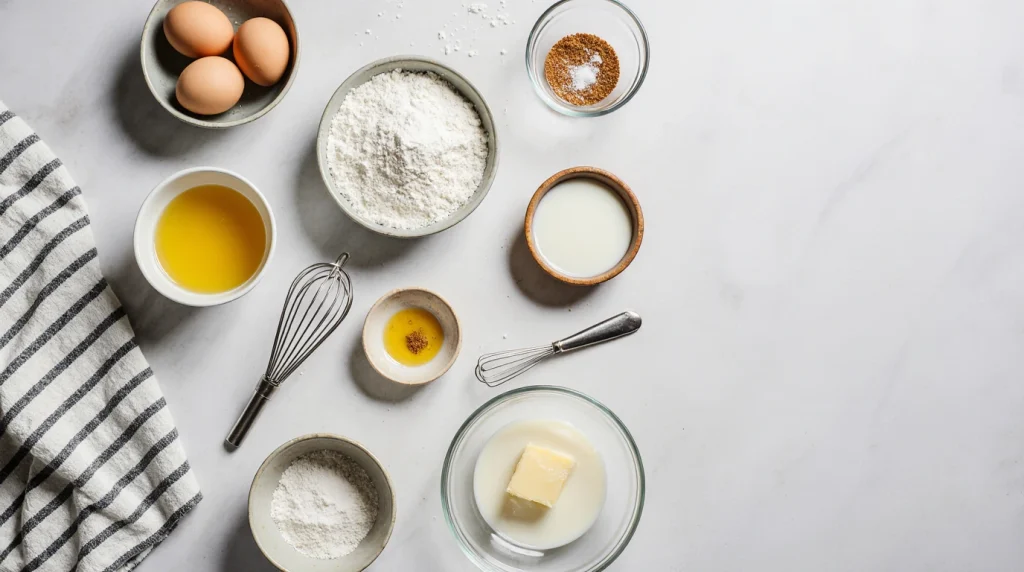
Ingredients & Prep
French Crepes Batter Essentials
For 12-15 crepes:
- 1 cup (120g) all-purpose flour, sifted to remove lumps
- 3 large eggs, at room temperature
- 1½ cups (360ml) whole milk
- 3 tablespoons melted butter, plus extra for cooking
- 2 tablespoons granulated sugar (omit for savory crepes)
- ¼ teaspoon salt
- 1 teaspoon vanilla extract (optional, for sweet crepes)
Critical prep step: Sift flour before measuring to prevent lumpy batter. Bring eggs and milk to room temperature for smoother blending. Melt butter completely and let cool slightly so it doesn’t cook the eggs when mixed.
Mixing Method & Resting Time
Whisk together flour, sugar, and salt in a large bowl. Create a well in the center, then add eggs and whisk until smooth. Gradually add milk in three additions, whisking constantly to prevent lumps. Stir in melted butter and vanilla until fully incorporated.
The secret: Cover batter and refrigerate for 30 minutes to 24 hours. This resting period allows flour to fully hydrate and gluten to relax, resulting in tender French crepes that spread easily in the pan.
Pan & Equipment Essentials
An 8-10 inch non-stick skillet or well-seasoned carbon steel pan works best. You’ll also need a ladle (¼ cup capacity), offset spatula or thin flexible turner, and pastry brush for buttering the pan. A blender makes mixing even easier—blend all ingredients for 30 seconds, scraping down sides once.
Step-by-Step Cooking Instructions
Pre-Cooking Prep
Stir the rested batter gently—it should have the consistency of heavy cream. If too thick, add milk one tablespoon at a time until it coats the back of a spoon lightly. Place a plate nearby for stacking finished crepes, and have your butter and brush ready.
Heat your pan over medium heat for 2-3 minutes. The temperature is crucial: too hot creates holes and burnt spots, too cool makes thick, pale crepes. Test with a drop of water—it should sizzle and evaporate within 2 seconds.
Cooking Method for Perfect French Crepes
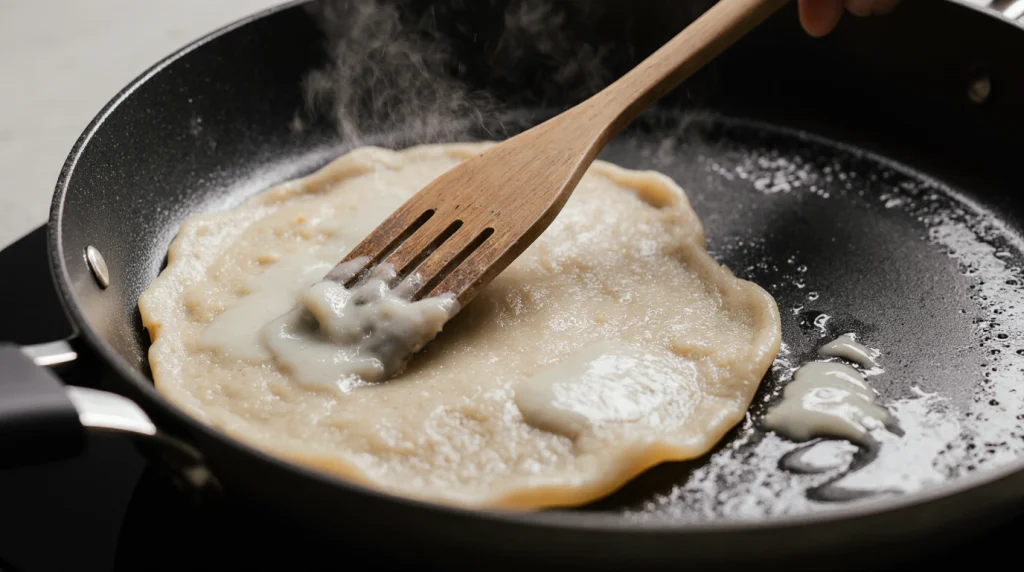
Lightly brush the pan with melted butter. Pour ¼ cup batter into the center of the pan, then immediately lift the pan off the heat and swirl in a circular motion, tilting in all directions until batter coats the bottom in a thin, even layer. This should take 2-3 seconds—work quickly before the batter sets.
Return the pan to heat and cook for 60-90 seconds until the edges turn golden and begin to curl away from the pan. The surface should look mostly dry with a slight sheen. Using your fingers or a thin spatula, gently lift one edge and flip the crepe in one smooth motion (or use the spatula). Cook the second side for just 30-45 seconds until light golden spots appear.
Doneness Check
The first side should be golden with subtle lacy brown spots. The second side will be lighter with distinctive spotting—this is the traditional appearance of authentic French crepes. If your first crepe is too thick, thin the batter slightly. If it has holes, reduce heat slightly and pour batter a bit faster.
Stacking & Keeping Warm
Slide each finished crepe onto your plate. No need to separate with parchment—French crepes won’t stick when properly cooked. For serving immediately, loosely cover the stack with foil and keep in a 200°F oven. The residual steam keeps them pliable without drying out.
Pro Tips for Perfect French Crepes
Avoiding Common Mistakes
Lumpy batter ruins texture. Always sift flour and whisk vigorously, or use a blender for guaranteed smoothness. If lumps remain, strain batter through a fine-mesh sieve before resting.
Skipping the rest creates tough crepes. Even 30 minutes makes a dramatic difference in texture. Plan ahead and make batter the night before for morning crepes—the flavor actually improves.
Too much butter creates greasy crepes. After the first crepe, you’ll need only a light brushing every 2-3 crepes. The pan builds up seasoning as you cook.
Tool Recommendations
A good non-stick pan is essential for beginners—brands like T-fal or Calphalon offer affordable options. A squeeze bottle for batter makes portion control easier once you’re comfortable. An offset spatula (used for cake decorating) slides under crepes effortlessly without tearing.
For serious crepe enthusiasts, a traditional French crepe spreader (a small wooden T-shaped tool) creates perfectly even, professional results, though a ladle and swirl technique works beautifully for home cooks.
Storage & Reheating
Refrigerate: Stack cooled crepes with parchment between layers, wrap tightly in plastic wrap, and refrigerate up to 3 days. Reheat individually in a dry pan over low heat for 15-20 seconds per side.
Freeze: Layer crepes with parchment, place in a freezer bag, and freeze up to 2 months. Thaw in the refrigerator overnight, or microwave frozen crepes for 20-30 seconds between damp paper towels.
Quick reheat trick: Wrap a stack of 4-5 crepes in damp paper towels and microwave for 30-45 seconds until warm and pliable.
Flavor Variations
Sweet French Crepes Fillings
Classic Nutella & Banana: Spread 2 tablespoons Nutella on a warm crepe, add sliced bananas, fold into quarters. Dust with powdered sugar.
Lemon Sugar: The most traditional French preparation—sprinkle granulated sugar over the crepe, squeeze fresh lemon juice, fold, and serve immediately.
Berry Compote: Simmer 2 cups mixed berries with ¼ cup sugar and 1 tablespoon lemon juice for 10 minutes. Spoon over folded crepes with whipped cream.
Savory French Crepes Options
Ham & Gruyère: The iconic “complète”—place a thin slice of ham and grated Gruyère cheese on the crepe while still in the pan. Crack an egg in the center, fold edges to create a square frame, and cook until egg sets.
Mushroom & Herbs: Sauté sliced mushrooms with garlic, thyme, and cream. Omit sugar from the batter for savory crepes. Fill generously and fold into triangles.
Spinach & Ricotta: Mix ricotta with wilted spinach, garlic, and nutmeg. Spread on crepes, roll, place in a baking dish, top with béchamel sauce, and bake at 375°F for 20 minutes.
International Twists
Japanese-Style Matcha Crepes: Add 1 tablespoon matcha powder to the batter. Fill with sweetened whipped cream and fresh strawberries.
Mexican Cajeta Crepes: Drizzle with cajeta (Mexican caramel), add toasted pecans and a sprinkle of sea salt.
Mediterranean Crepes: Fill with crumbled feta, sun-dried tomatoes, olives, and fresh basil for a Greek-inspired savory option.
Serving Suggestions
French crepes shine when paired with complementary flavors and textures that don’t overpower their delicate nature.
For breakfast: Serve sweet crepes alongside fresh fruit salad, Greek yogurt, and crispy bacon. The contrast of textures elevates the meal beyond basic pancakes.
For dessert: Pair with vanilla bean ice cream, fresh whipped cream, or crème fraîche. A light dusting of powdered sugar through a fine sieve adds elegant presentation.
For dinner: Savory French crepes work beautifully with simple green salad dressed in Dijon vinaigrette, roasted vegetables, or French onion soup as a starter.
Beverage pairings: Sweet crepes pair wonderfully with café au lait, hot chocolate, or champagne for brunch celebrations. Savory crepes complement dry white wines like Sauvignon Blanc or light French cider.
Presentation tip: Fold crepes into quarters or roll them tightly, then arrange on plates with garnishes visible—fresh berries, mint sprigs, or a drizzle of sauce adds restaurant-quality appeal.
FAQs
Can I make the batter ahead of time? Yes! French crepes batter actually improves when made 12-24 hours in advance. The flour fully hydrates and the flavor mellows. Store covered in the refrigerator and stir gently before using. The batter may thicken slightly—thin with 1-2 tablespoons of milk if needed.
Why are my crepes rubbery or tough? Overmixing develops too much gluten, and cooking at too high heat toughens the proteins. Mix just until smooth, let the batter rest, and maintain medium heat. Also ensure you’re making them thin enough—thick crepes turn rubbery when they cool.
How do I fix holes in my crepes? Holes occur when the pan is too hot or you don’t swirl fast enough. Reduce heat slightly and work more quickly when spreading batter. For immediate fixes, drizzle a tiny bit of batter over the hole while cooking the first side.
Can I use a regular blender instead of whisking? Absolutely! A blender creates the smoothest batter in seconds. Blend all ingredients on medium speed for 30 seconds, scrape down sides, then blend 10 more seconds. This method virtually eliminates lumps and aerates the batter beautifully.
What’s the difference between crepes and pancakes? French crepes contain more eggs and liquid, no leavening agents (like baking powder), and are cooked in a much thinner layer. This creates their signature delicate, slightly chewy texture versus the thick, fluffy structure of American pancakes.
Are French crepes safe during pregnancy? Yes, when eggs are fully cooked. Ensure your crepes are cooked through with no raw batter remaining. Avoid raw milk cheeses or undercooked egg fillings (like sunny-side-up eggs in savory crepes) during pregnancy.
Why is my first crepe always bad? The “test crepe” is a French cooking tradition! The first one seasons the pan and helps you calibrate temperature and batter consistency. Don’t worry—even experienced cooks consider the first crepe expendable. Use it to check thickness and adjust accordingly.
Conclusion
Fire up your stovetop and experience the magic of authentic French crepes tonight! With this foolproof technique, you’re just 30 minutes away from delicate, golden crepes that’ll transform your breakfast routine, impress dinner guests, or satisfy your dessert cravings with elegant simplicity.
Join over 15,000 home cooks who’ve mastered this classic French recipe and discovered how versatile, delicious, and surprisingly simple French crepes can be. Whether you’re team Nutella-banana or savory ham-and-cheese, this foundational recipe opens endless culinary possibilities.
Ready for more French-inspired recipes? Try our [Classic French Croissants Guide] for another bakery favorite you can master at home, or explore our [Authentic Crêpes Suzette Recipe] for an impressive flambéed dessert that takes your crepe skills to the next level!
Don’t forget: Share your crepe creations with us! Tag your photos and let us know which filling combination became your favorite. Happy cooking!